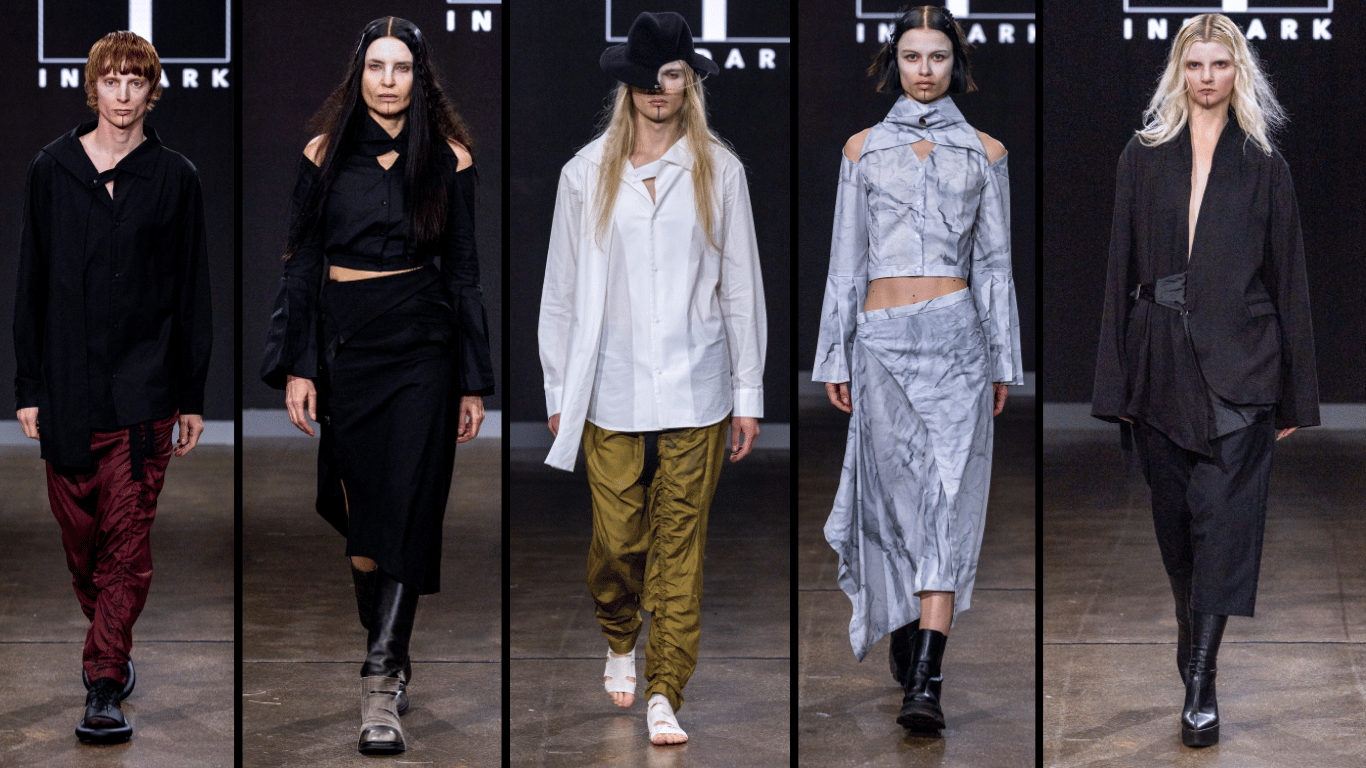
Brand Spotlight: INF Redefines Layering Through Fashion in Motion
There are clothes designed to be seen once. And then there are clothes that make you look again.
INF belongs decidedly to the latter.
At a moment when fashion is reconsidering the value of excess and consumers are becoming increasingly selective about what earns a place in their wardrobes, INF offers a compelling alternative: clothing conceived not as a fixed look, but as something capable of transformation.
The philosophy finds its clearest expression in what the brand describes as INF Look-Twice Layering—an approach built around proportion, construction, movement and the possibility of discovering something different in a garment each time it is worn.
Look once, and you see the silhouette.
Look twice, and the construction begins to reveal itself.
INF Look-Twice Layering: When Clothing Refuses to Stay Still
Layering is hardly new to fashion. INF, however, approaches it less as a styling device and more as part of the architecture of the garment itself.
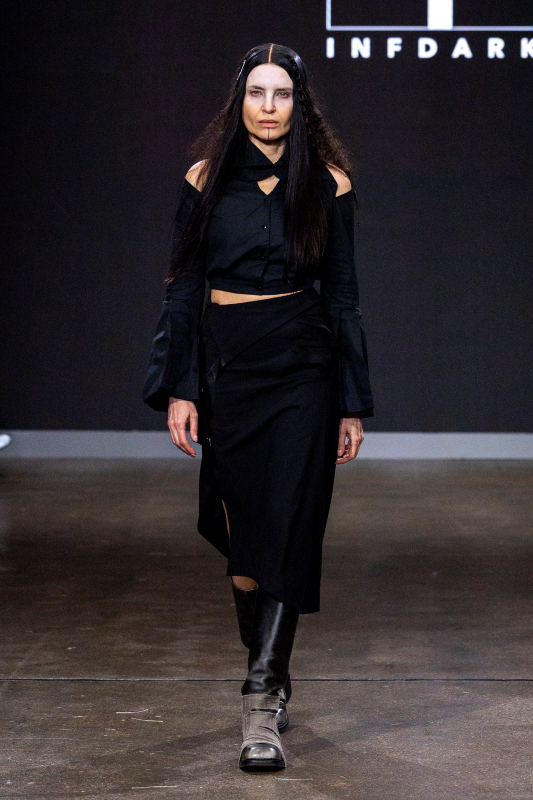
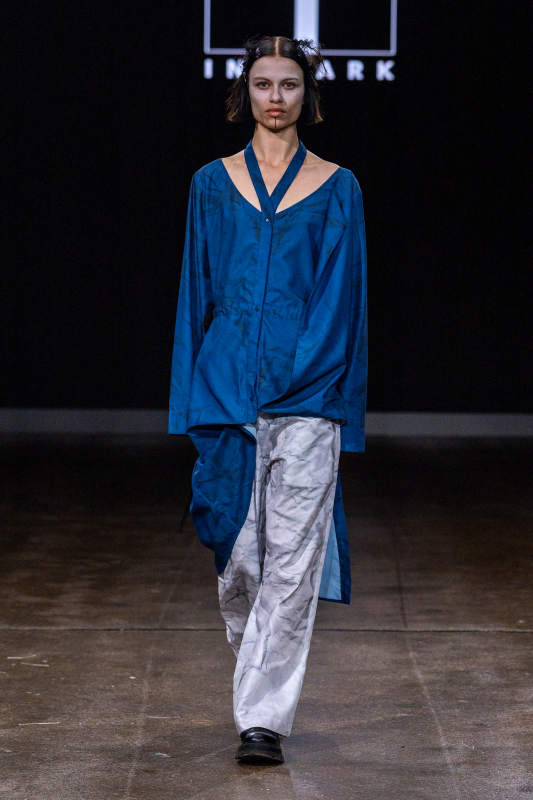
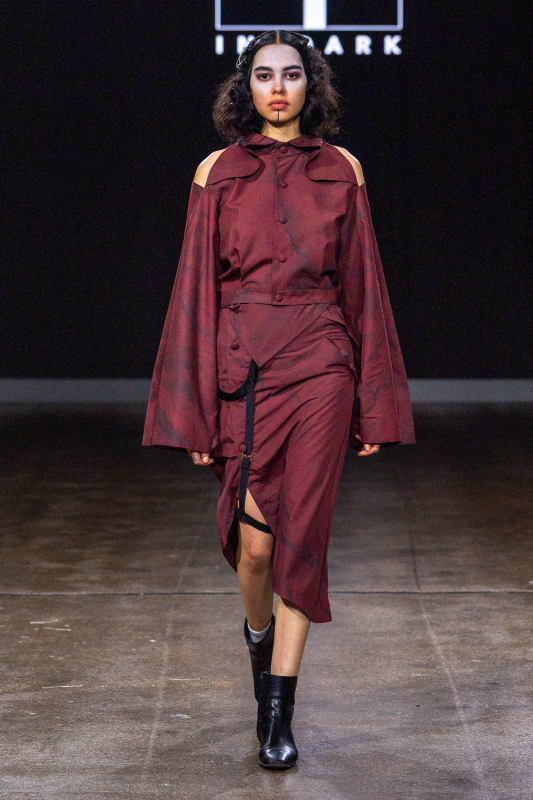
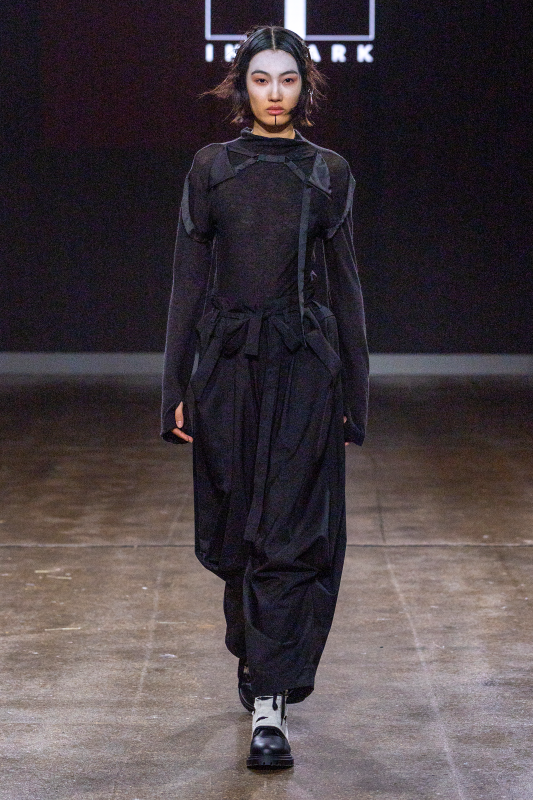
Oversized shirts extend beyond expected proportions. Panels emerge where conventional construction might conceal them. Straps interrupt otherwise familiar silhouettes. Shoulders are exposed unexpectedly, while elongated layers shift as the body moves.
A shirt may not behave entirely like a shirt. A skirt can appear wrapped, interrupted or partially dismantled. Trousers are generous and deliberately manipulated rather than conventionally tailored.
The effect is subtle but intellectually engaging.
Instead of presenting the wearer with a prescribed formula, INF leaves room for interpretation.
That distinction is important. The clothes do not simply decorate the body; they invite participation.
From Garment to System
INF explored this philosophy particularly strongly in its Autumn/Winter 2026 collection, presented during London Fashion Week with Fashion Scout.
The collection began with a fundamental question: How does a garment come into being?
Rather than treating the finished silhouette as the ultimate destination of design, INF returned to the stages that usually disappear during garment construction. Elements normally hidden or considered transitional were dismantled, exposed and reintroduced as visible components of the clothes.
The result challenged the notion that a garment must have one definitive identity.
Through layering, alternative combinations and functional transformations, pieces could exist in multiple states. Clothing became less of a finished object and more of a system—one completed, in part, by the person wearing it.
It is an idea that feels particularly relevant to contemporary fashion.
A Beautifully Unfinished World
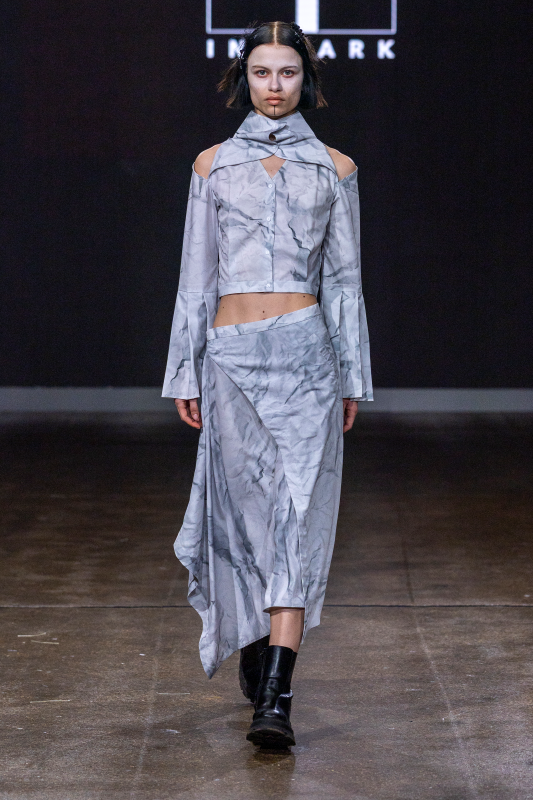
Visually, the AW26 runway inhabited an intriguing territory.
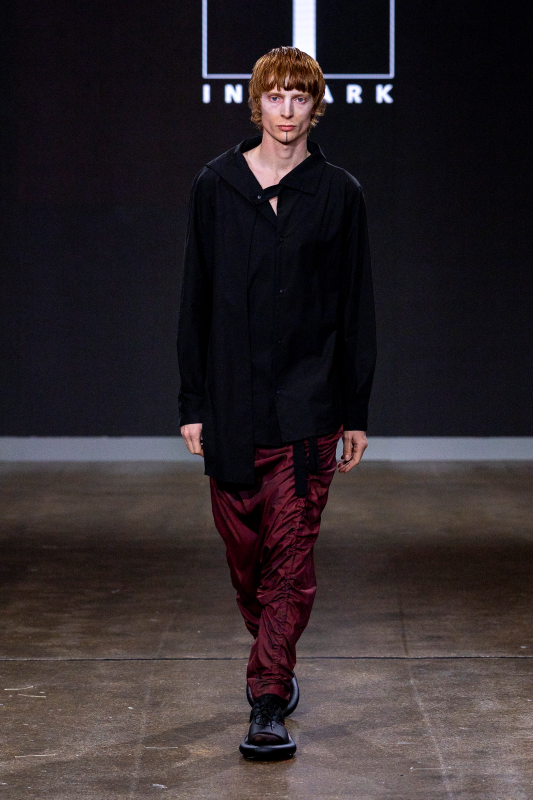
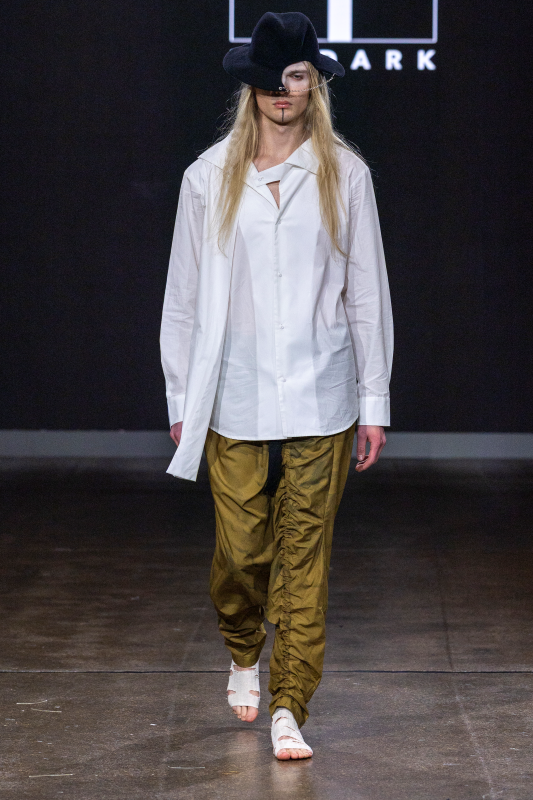
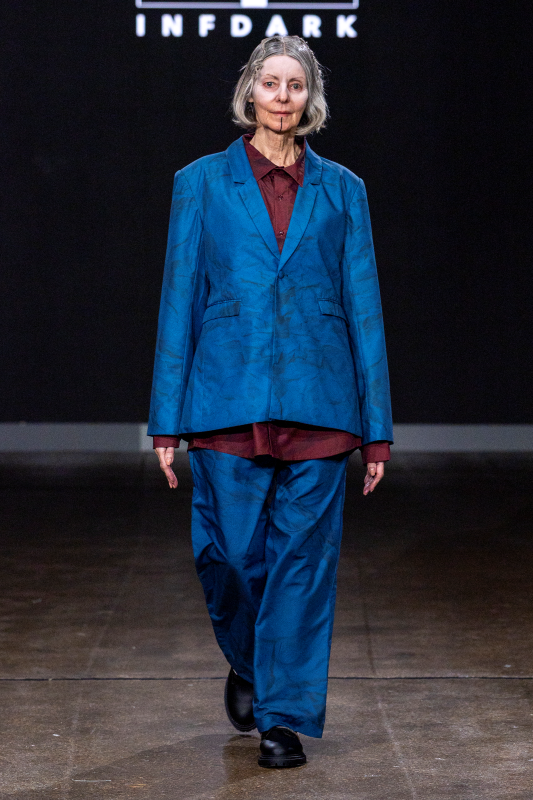
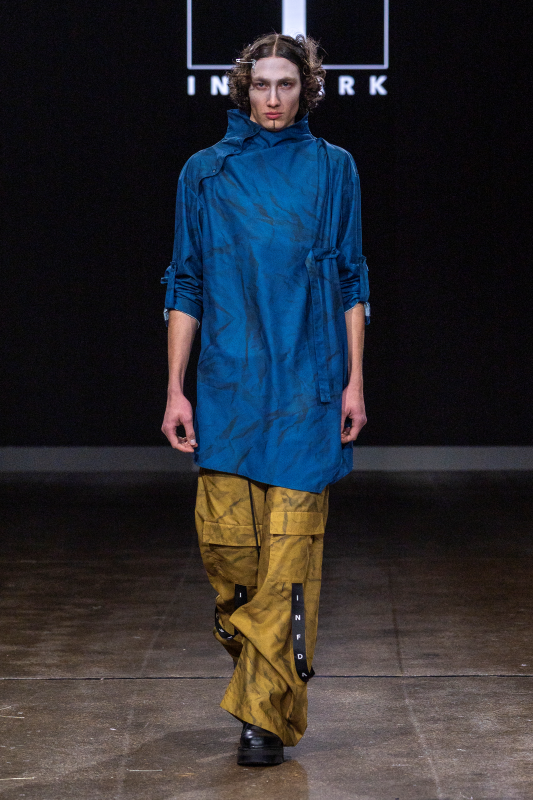
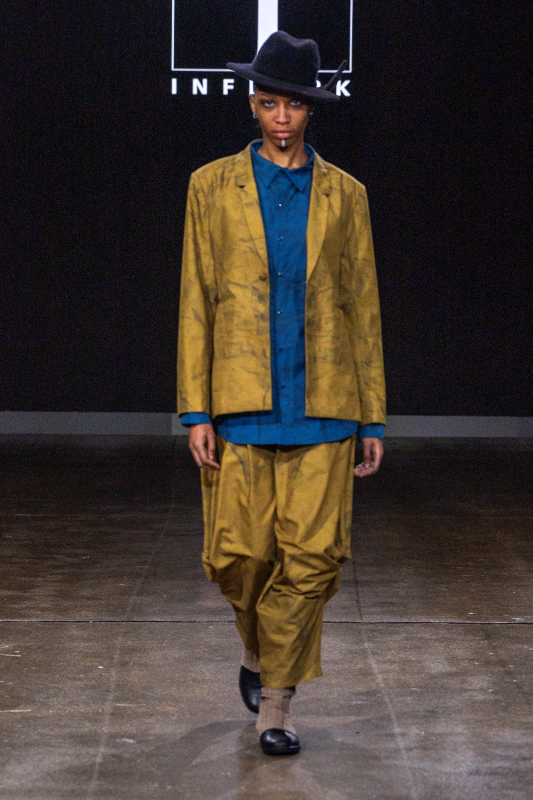
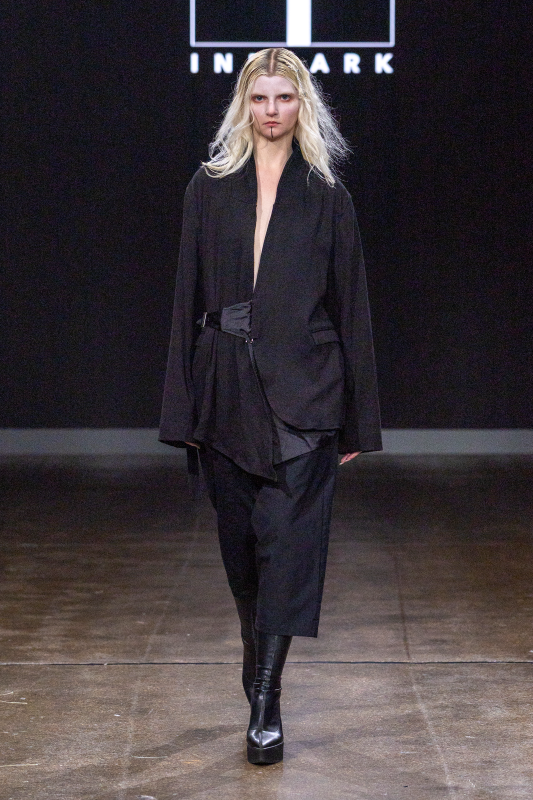
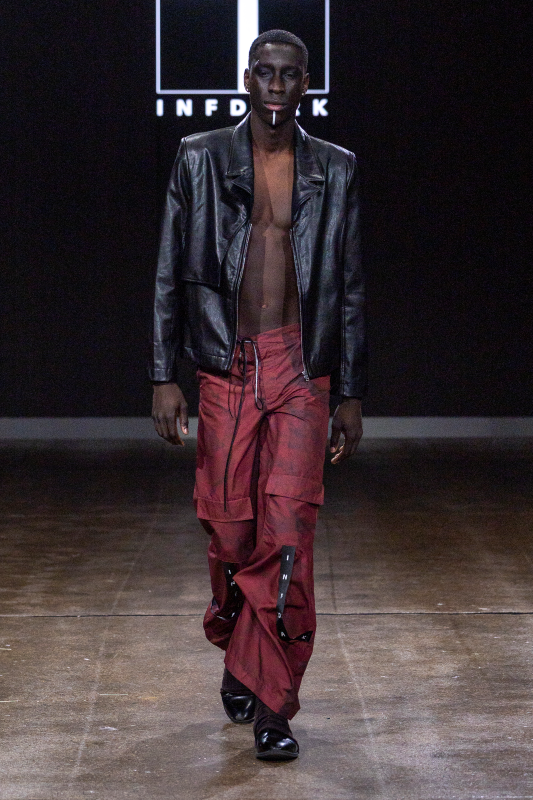
Black dominated portions of the collection, appearing in fluid tailoring, elongated shirts, asymmetric skirts and voluminous trousers. But INF’s darkness was punctuated by saturated burgundy, mineral gray, electric blue and weathered ochre, creating a palette that felt almost excavated rather than polished.
Surfaces appeared intentionally lived-in. Fabrics carried wrinkles, shadows and irregular markings that gave otherwise tailored pieces an imperfect quality.
Then came the contradictions.
A sharply cut blazer met relaxed trousers. A white shirt was paired with gathered ochre pants. Burgundy tailoring appeared softened and disturbed rather than pristine. Utilitarian details surfaced against elegant proportions.
There was something post-apocalyptic about the collection, but not in the theatrical sense of fashion imagining the end of the world.
This felt more like what remains afterward.
Clothing survives. People adapt. Structure loosens. Familiar things acquire new purposes.
And somehow, life continues.
The New Luxury May Be Possibility
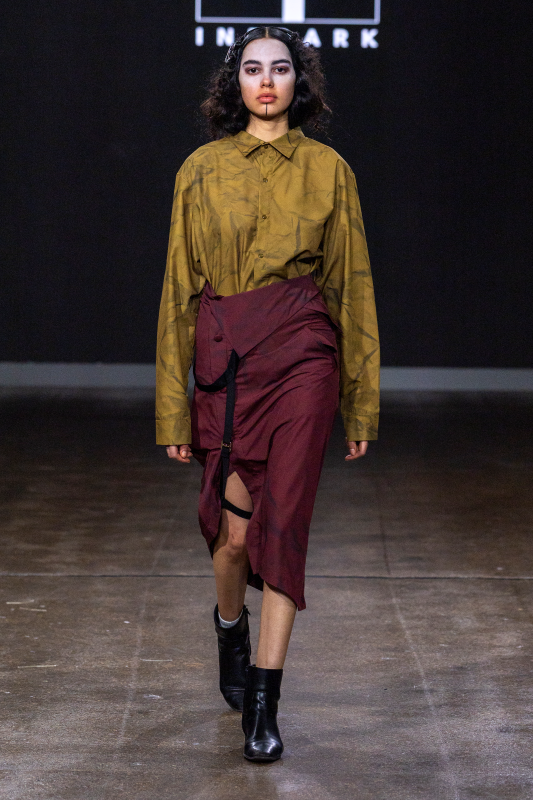
There is another reason INF’s design philosophy deserves attention.
Luxury is increasingly being measured not simply by how much a garment costs or how visibly it announces itself, but by what it offers over time.
Can it be worn differently?
Can it move between seasons?
Can it change according to the person wearing it?
Can we return to it years later and discover another possibility?
INF Look-Twice Layering addresses those questions through design rather than rhetoric.
A garment capable of multiple interpretations naturally encourages a longer relationship with its owner. Transformation, adaptability and longevity become interconnected, making versatility part of the creative proposition rather than an afterthought.
In this context, layering becomes more than an aesthetic.
It becomes intelligent design.
Beyond Age, Gender and the Prescribed Silhouette
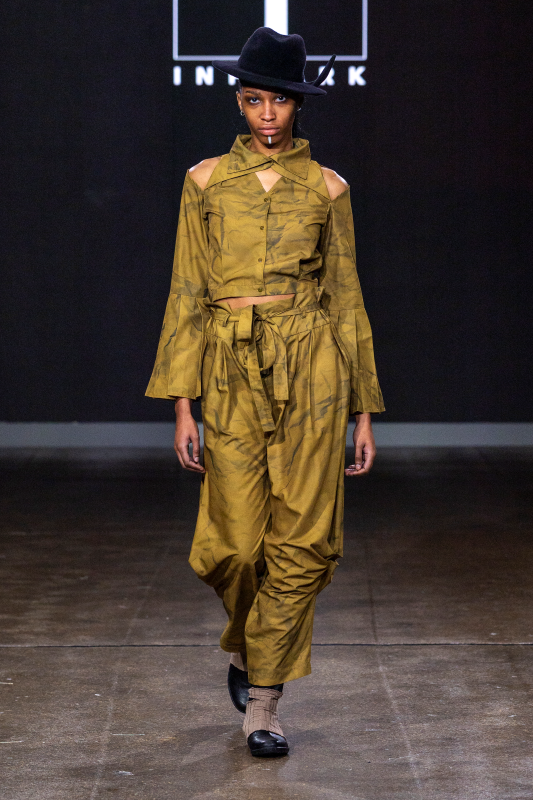
Perhaps one of the most compelling aspects of INF’s visual language is how naturally it resists categorization.
The AW26 runway moved between masculine and feminine references without demanding a strict distinction between them. Tailoring, skirts, oversized shirting, cropped proportions and fluid trousers existed within the same visual vocabulary.
The casting reinforced that freedom.
Different ages, identities and physical presences occupied the runway, shifting attention away from a single idealized fashion archetype and back toward the clothes themselves.
That choice feels particularly appropriate for a brand interested in transformation.
INF does not appear to be asking, Who is supposed to wear this?
The more interesting question is:
What will you do with it?
Individuality Over the Trend Cycle
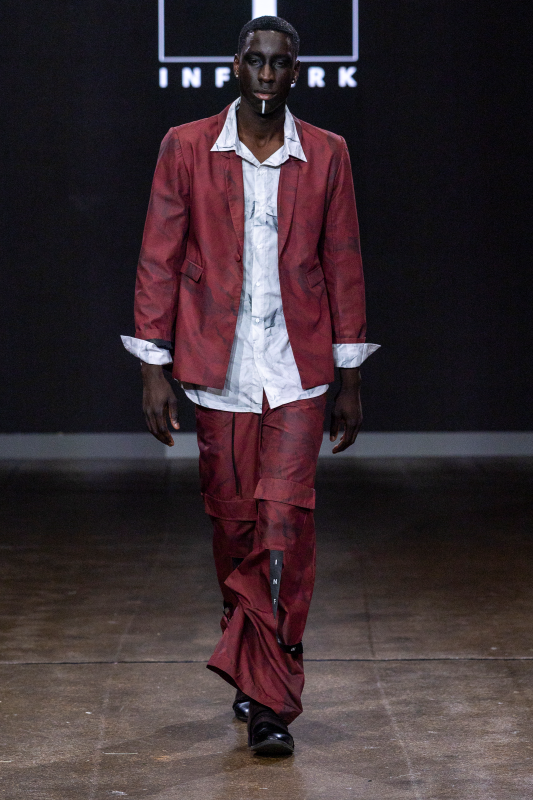
There is a quiet confidence in designing clothing that does not immediately reveal everything it has to say.
In an industry increasingly driven by instantaneous images, viral moments and rapidly changing aesthetics, INF asks for something surprisingly rare: attention.
Its garments reward observation.
The second look reveals the displaced seam. The unexpected opening. The extra panel. The strap that changes a silhouette. The proportion that initially seemed accidental but clearly was not.
And therein lies the appeal of Look-Twice Layering.
INF is not asking its wearer to accumulate more clothing in order to create more looks. It is proposing that thoughtfully constructed clothing can contain more than one possibility from the beginning.
As the brand prepares to return to London Fashion Week next season, that philosophy feels less like a passing styling movement and more like a statement about where contemporary fashion may be heading.
Toward fewer rules.
Toward greater adaptability.
Toward clothes with enough complexity to evolve alongside the people who wear them.
Because perhaps the most interesting garment is no longer the one everyone notices immediately.
It is the one that gives us a reason to look twice.
For more about the brand, please visit: @INFDARK
Photo Credits: Courtesy of INF & Black PR Global.
Spanish Version
INF redefine el arte de las capas con una moda en transformación
Hay prendas diseñadas para ser vistas una sola vez. Y hay otras que nos obligan a mirar de nuevo.
INF pertenece, definitivamente, al segundo grupo.
En un momento en que la moda reconsidera el valor del exceso y los consumidores son cada vez más selectivos con las piezas que incorporan a sus guardarropas, INF propone una alternativa fascinante: prendas concebidas no como looks estáticos, sino como creaciones capaces de transformarse.
Esta filosofía encuentra una de sus expresiones más claras en lo que la marca denomina INF Look-Twice Layering, una propuesta construida alrededor de las proporciones, la estructura, el movimiento y la posibilidad de descubrir algo diferente en una prenda cada vez que se lleva.
A primera vista, vemos la silueta.
A la segunda, comenzamos a descubrir su construcción.
INF Look-Twice Layering: cuando la ropa se niega a permanecer estática
Vestirse en capas no es precisamente algo nuevo en la moda. Sin embargo, INF aborda el concepto menos como un recurso de styling y más como parte de la arquitectura de la propia prenda.
Camisas oversized se extienden más allá de las proporciones esperadas. Aparecen paneles allí donde la construcción convencional probablemente intentaría ocultarlos. Las tiras interrumpen siluetas aparentemente familiares. Los hombros quedan expuestos de manera inesperada, mientras las capas alargadas cambian con el movimiento del cuerpo.
Una camisa puede dejar de comportarse completamente como una camisa. Una falda puede parecer envuelta, interrumpida o parcialmente deconstruida. Los pantalones adquieren volumen y son deliberadamente manipulados en lugar de responder a una sastrería convencional.
El resultado es sutil, pero intelectualmente estimulante.
En lugar de ofrecer al consumidor una fórmula predeterminada, INF deja espacio para la interpretación.
Y esa diferencia es importante.
Las prendas no se limitan a vestir el cuerpo; invitan a quien las lleva a participar en su transformación.
De la prenda al sistema
INF exploró esta filosofía de manera particularmente intensa en su colección Autumn/Winter 2026, presentada durante London Fashion Week junto a Fashion Scout.
La colección partió de una pregunta fundamental: ¿Cómo llega una prenda a existir?
En lugar de considerar la silueta terminada como el destino final del diseño, INF regresó a esas etapas que normalmente desaparecen durante el proceso de construcción. Elementos habitualmente ocultos o considerados transitorios fueron desmontados, expuestos y reincorporados como componentes visibles de las prendas.
El resultado desafió la idea de que una pieza debe poseer una única identidad definitiva.
A través de capas, diferentes combinaciones y transformaciones funcionales, las prendas podían existir en múltiples estados. La ropa dejaba de ser simplemente un objeto terminado para convertirse en una especie de sistema que, en cierta medida, termina de construir la propia persona al vestirlo.
Es una idea que resulta particularmente relevante dentro de la conversación actual de la moda.
La belleza de un mundo aparentemente inacabado
Visualmente, la colección AW26 se movió dentro de un territorio fascinante.
El negro dominó parte de la pasarela a través de sastrería fluida, camisas alargadas, faldas asimétricas y pantalones voluminosos. Sin embargo, la oscuridad característica de INF fue interrumpida por tonalidades intensas de borgoña, gris mineral, azul eléctrico y ocre envejecido, creando una paleta que parecía más descubierta o excavada que perfectamente pulida.
Las superficies lucían deliberadamente vividas.
Los tejidos conservaban arrugas, sombras y marcas irregulares que aportaban una cualidad imperfecta incluso a las piezas de inspiración sartorial.
Y entonces aparecieron las contradicciones.
Un blazer estructurado se encontraba con pantalones relajados. Una camisa blanca acompañaba pantalones fruncidos en tonos ocre. La sastrería borgoña aparecía suavizada y alterada en lugar de impecablemente rígida. Detalles utilitarios irrumpían sobre proporciones elegantes.
Había algo postapocalíptico en la colección, pero no en el sentido teatral de imaginar el fin del mundo.
Parecía hablar, más bien, de lo que permanece después.
La ropa sobrevive. Las personas se adaptan. Las estructuras se relajan. Lo familiar encuentra nuevos propósitos.
Y, de alguna manera, la vida continúa.
El nuevo lujo podría ser la posibilidad
Existe otra razón por la que la filosofía de INF merece atención.
El lujo comienza a medirse no solamente por cuánto cuesta una prenda o por la facilidad con la que anuncia su procedencia, sino también por lo que puede ofrecernos a través del tiempo.
¿Podemos llevarla de distintas maneras?
¿Puede acompañarnos durante diferentes temporadas?
¿Puede transformarse dependiendo de quien la lleva?
¿Podemos regresar a ella años después y descubrir una nueva posibilidad?
INF Look-Twice Layering responde a estas preguntas desde el propio diseño.
Una prenda capaz de ofrecer diferentes interpretaciones fomenta naturalmente una relación más prolongada con su propietario. Transformación, adaptabilidad y longevidad comienzan así a relacionarse entre sí, convirtiendo la versatilidad en parte de la propuesta creativa y no simplemente en un beneficio añadido.
Dentro de este contexto, vestirse en capas deja de ser solamente una cuestión estética.
Se convierte en diseño inteligente.
Más allá de la edad, el género y la silueta establecida
Quizás uno de los aspectos más interesantes del lenguaje visual de INF sea la naturalidad con la que evita las categorías tradicionales.
La pasarela AW26 transitó entre referencias masculinas y femeninas sin exigir una división estricta entre ambas. Sastrería, faldas, camisas oversized, proporciones cropped y pantalones fluidos coexistieron dentro de un mismo vocabulario visual.
El casting reforzó esa libertad.
Diferentes edades, identidades y presencias ocuparon la pasarela, desplazando la atención de un único arquetipo idealizado de belleza hacia las propias prendas y las personas que las interpretaban.
La decisión resulta especialmente coherente para una marca interesada en la transformación.
INF no parece preguntarse: ¿Quién se supone que debe llevar esta prenda?
La pregunta realmente interesante es:
¿Qué harás tú con ella?
Individualidad por encima del ciclo de las tendencias
Existe una seguridad silenciosa en diseñar prendas que no revelan inmediatamente todo lo que tienen que decir.
En una industria cada vez más impulsada por imágenes instantáneas, momentos virales y estéticas que cambian a enorme velocidad, INF exige algo sorprendentemente escaso: atención.
Sus diseños recompensan la observación.
La segunda mirada descubre la costura desplazada. La abertura inesperada. El panel adicional. La tira que modifica una silueta. Esa proporción que inicialmente parecía accidental, pero que claramente nunca lo fue.
Y precisamente allí reside el atractivo del Look-Twice Layering.
INF no propone que necesitemos acumular más ropa para crear más looks. Su propuesta sugiere algo mucho más interesante: que una prenda cuidadosamente construida puede contener múltiples posibilidades desde el momento de su creación.
Mientras la marca se prepara para regresar a London Fashion Week la próxima temporada, esta filosofía comienza a sentirse menos como un movimiento pasajero de styling y más como una declaración sobre el rumbo que podría estar tomando la moda contemporánea.
Hacia menos reglas.
Rumbo a una mayor adaptabilidad.
Hacia prendas con suficiente complejidad para evolucionar junto a las personas que las llevan.
Porque quizás la prenda más interesante ya no sea aquella que todos notan inmediatamente.
Sino aquella que nos ofrece una razón para mirar dos veces.
“To redefine fashion is to transform the familiar into something worth looking at twice.”
— Miami Fashion Spotlight
Craving for more? We recommend:
Cartier Le Chœur des Pierres Celebrates the Art of Gemstones
Louis Vuitton Multipass Bag Debuts as the House’s New Signature Icon for Fall-Winter 2026
FENDI Unveils Maria Grazia Chiuri’s Debut Couture Fall/Winter 2026-2027 Collection in Rome
COVERGIRL Brings Glowing Beauty Trends to Miami Swim Week 2026
Summer Wedding Guest Style Guide: Elegant Occasion Dressing with GR LONDON PARIS
Louis Vuitton Women’s Resort Collection: The Ultimate Luxury Wardrobe for Chic Summer Getaways
Kimi Antonelli Wins the 2026 Miami Grand Prix as Louis Vuitton Celebrates Victory in Style
Lacoste Miami Open 2026 Finals Weekend: Where Sport and Fashion Met in Style