
The Jewelry Edit: Arte Nova Turns Three Generations of Portuguese Goldsmithing Into Modern Jewelry

From a pioneering goldsmith in 1950s Portugal to a contemporary jewelry house reaching women around the world, Arte Nova is building its future on nearly seven decades of craftsmanship.
There is something compelling about a piece of jewelry that carries more than beauty.
Sometimes, behind the polished gold, the diamond, or the delicate curve of a bracelet, there is a much longer story—one shaped by hands, machinery, family memory, and the quiet persistence of a craft passed from one generation to the next.
For Arte Nova Jewellery, that story begins not in 2019, when the contemporary brand was officially launched, but more than six decades earlier.
It begins in Portugal.
And it begins with a goldsmith named José Martins Barbosa.
Before the Brand, There Was the Workshop
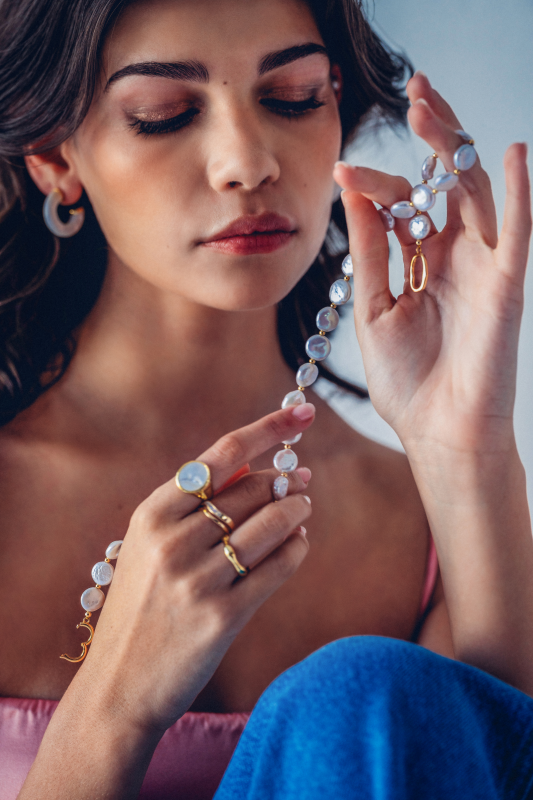
In 1956, Portugal was still relatively closed to the wider world when Barbosa began building what would eventually become the foundation of Arte Nova.
According to the brand’s history, he became the first Portuguese goldsmith to import machinery specifically for jewelry production—an ambitious move made even though he did not speak another language. But importing machinery was only the beginning.
When the equipment available to him could not meet his needs, Barbosa began building machines himself.
Some of those machines, Arte Nova says, are still operating inside the family’s factory today.
It is the kind of detail that changes how one looks at the finished jewelry.
Suddenly, a necklace is not simply a necklace.
It becomes part of an industrial and artisanal lineage—one connecting today’s designs to tools created by a Portuguese craftsman nearly seventy years ago.
Demand grew quickly. For the first two decades, the factory operated 24 hours a day in three shifts, an extraordinary indication of how rapidly the business expanded.
When Barbosa eventually retired, the second generation stepped in. A larger factory followed, production capacity doubled, and the company continued developing new models and techniques while supplying the Portuguese wholesale market.
Then came another shift.
In 2014, the third generation joined the family business, bringing a new creative direction and an ambition to look beyond the domestic market. That transition ultimately laid the groundwork for Arte Nova Jewellery as a direct-to-consumer brand.
Arte Nova officially arrived in 2019.
But by then, its hands already knew exactly what they were doing.
Gondomar: Where Craftsmanship Is Part of the Landscape
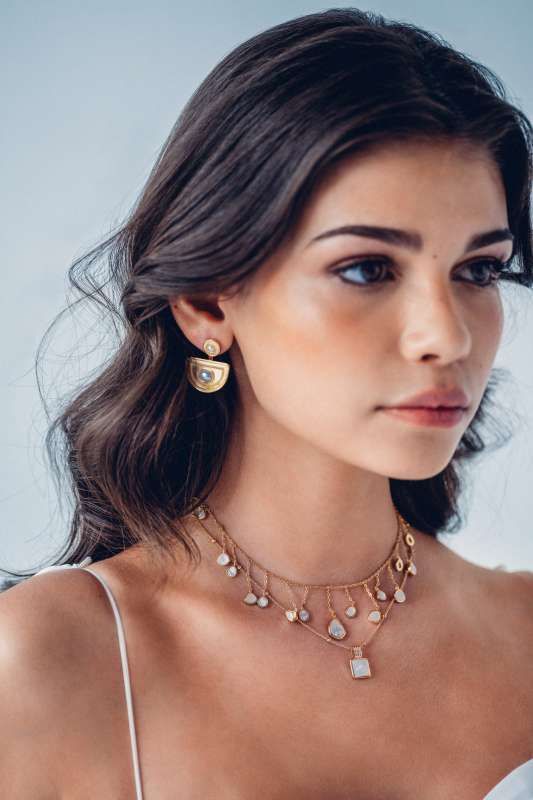
Arte Nova was born in Gondomar, a Portuguese town with a centuries-old jewelry-making tradition.
That geography matters.
The brand does not present Portuguese craftsmanship as nostalgia to be preserved behind glass. Instead, it treats heritage as material to work with—something that can be respected, challenged, and translated into a more contemporary design language.
That tension between old and new is perhaps the most interesting thing about Arte Nova.
The history is traditional.
The jewelry does not have to be.
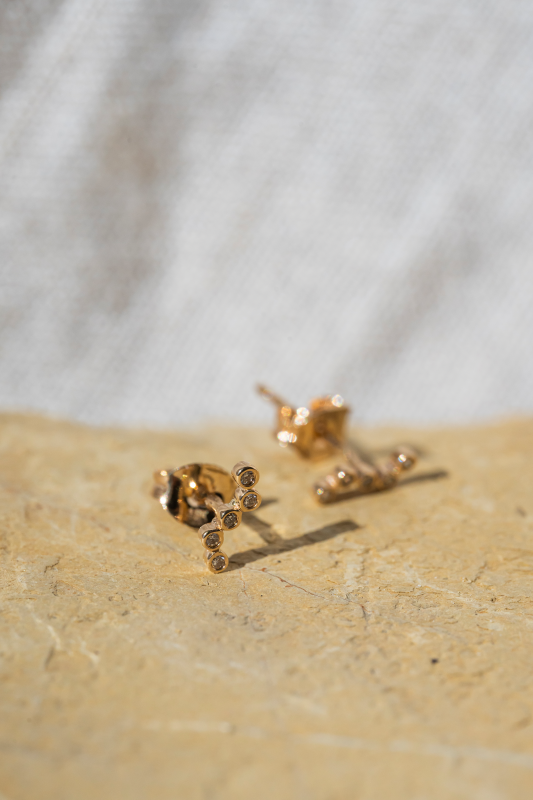
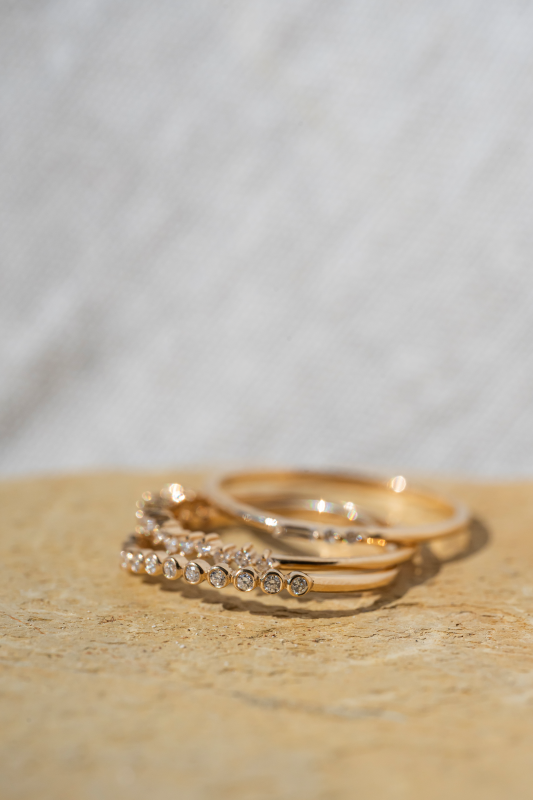
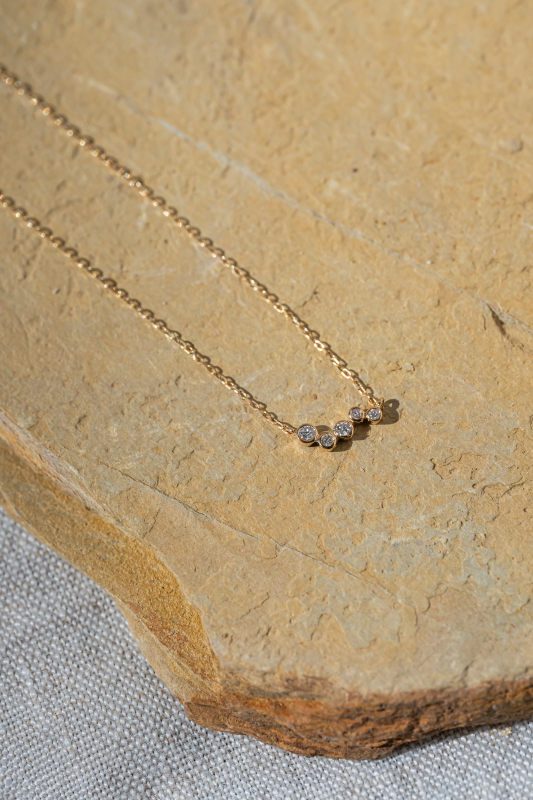
Its collections move between restrained and expressive: delicate chains, stackable rings and minimalist pieces sit alongside color, texture, pearls, gemstones, bolder forms and more decorative silhouettes.
The brand describes its collections as being created for the modern woman, someone whose changing interests, ambitions and occasions require jewelry capable of moving with her. Its design vocabulary ranges from pieces inspired by nature and luxury to vibrant color, bold shapes and quieter minimalism.
That versatility makes the heritage feel considerably less formal.
Arte Nova does not appear interested in producing jewelry that simply waits for an occasion.
It wants the pieces to enter real wardrobes.
Silver, Diamonds—and a Particularly Portuguese Gold
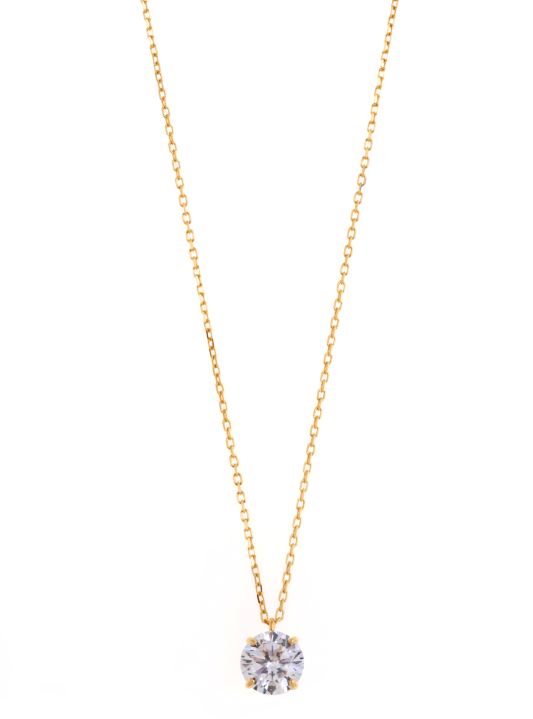
The breadth of the collection is also reflected in its materials.
Arte Nova works in 925 sterling silver, which the house positions as a foundation for enduring, everyday pieces.
Its fine jewelry offering includes 18-karat gold and diamonds, where the aesthetic becomes more delicate and traditionally precious.
But one of the most distinctive parts of the lookbook is a category the brand simply calls:
19.2K Portuguese Gold.
Arte Nova presents 19.2-karat gold as part of its Portuguese jewelry identity, describing it in terms of heritage, sophistication and luminosity.
Within the collection, that gold is not restricted to elaborate ceremonial pieces. It appears in slender necklaces, crosses, hearts, earrings, bracelets and contemporary designs that can be worn with considerable ease.
And perhaps that is where Arte Nova’s larger philosophy becomes clearest.
The craftsmanship may be inherited.
The way a woman wears it is entirely her own.
From Porto to a Wider World

As the third generation expanded the company’s creative ambitions, Arte Nova began moving beyond the factory and wholesale business that had defined earlier decades.
The brand opened its first physical store in Porto’s historic downtown in 2021. Its timeline then marks 2022 as a year of significant retail expansion, with sales through El Corte Inglés in Portugal, TK Maxx in the United States and Winners in Canada.
The brand’s current materials also cite Nordstrom among its retail partners and note that Arte Nova jewelry has reached customers in markets including the United States, Canada, China, the United Kingdom and Spain.
For a company whose story began in one Portuguese workshop, that evolution feels significant.
Yet international expansion is not the most interesting part of the story.
Continuity is.
The factory remains in Gondomar, while the retail store sits in Porto. The machinery, the goldsmithing tradition and the generational knowledge have not been replaced by the contemporary brand—they have become its infrastructure.
When Heritage Does Not Mean Standing Still
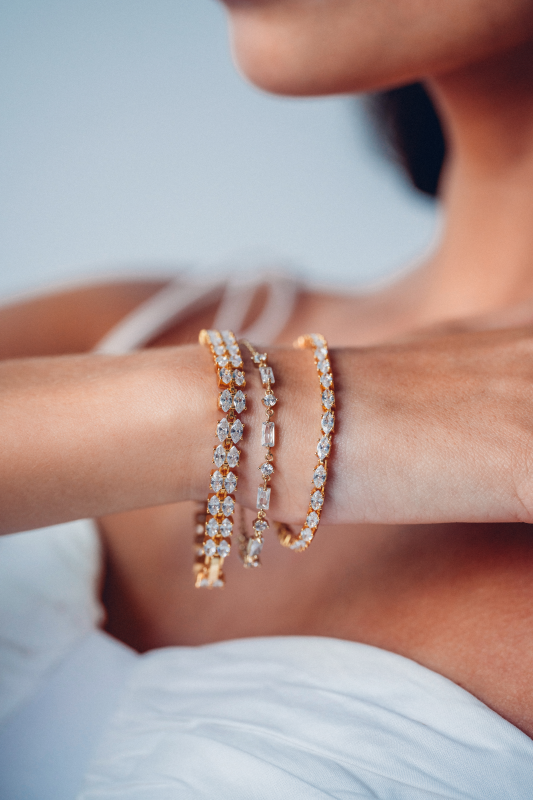
Luxury often talks about heritage.
The word appears so frequently that it can become almost decorative—a convenient way of suggesting authenticity, longevity or craftsmanship.
Arte Nova has something more tangible.
There are three generations.
There is a factory.
There are machines built by its founder.
And there is a family business that has moved through wholesale production, technological experimentation, international expansion and, eventually, the creation of a modern jewelry label.
The brand itself describes that inheritance through three ideas: innovation, creativity and dynamism, while emphasizing its commitment to the traditional goldsmithing knowledge passed through generations.
That combination matters because preserving craftsmanship does not necessarily mean preserving everything exactly as it was.
Sometimes honoring a tradition means allowing it to evolve.
For Arte Nova, the transformation from José Martins Barbosa’s 1956 workshop to a contemporary jewelry brand seems less like a departure from its history than the continuation of it.
The tools changed.
The women wearing the jewelry changed.
The market became global.
But somewhere in Gondomar, machines built by the man who started it all are reportedly still working.
And perhaps there is no more fitting metaphor for Arte Nova than that: a heritage that was never meant to sit still.
“The most beautiful jewelry doesn’t simply adorn us—it carries a story worth wearing.”
— Miami Fashion Spotlight
Spanish Version
The Jewelry Edit: Arte Nova convierte tres generaciones de orfebrería portuguesa en joyería moderna
Desde un orfebre pionero en el Portugal de los años cincuenta hasta una casa de joyería contemporánea que llega a mujeres alrededor del mundo, Arte Nova construye su futuro sobre casi siete décadas de tradición artesanal.
Hay algo especialmente poderoso en una pieza de joyería que lleva consigo algo más que belleza. A veces, detrás del oro pulido, del diamante o de la delicada curva de una pulsera, existe una historia mucho más larga: una historia moldeada por manos, maquinaria, memoria familiar y la silenciosa continuidad de un oficio transmitido de una generación a otra.
En el caso de Arte Nova Jewellery, esa historia no comienza en 2019, cuando nació oficialmente la marca contemporánea. Comienza más de seis décadas antes. Comienza en Portugal.
Y comienza con un orfebre llamado José Martins Barbosa.
Antes de la marca, estuvo el taller
En 1956, Portugal todavía era un país relativamente cerrado al resto del mundo cuando Barbosa comenzó a construir lo que más tarde se convertiría en la base de Arte Nova.
Según la historia oficial de la marca, fue el primer orfebre portugués en importar maquinaria específicamente para la fabricación de joyería, una decisión ambiciosa considerando que no hablaba ningún otro idioma. Pero importar maquinaria fue apenas el comienzo. Cuando el equipo disponible no respondía a sus necesidades, Barbosa empezó a construir sus propias máquinas.
Arte Nova afirma que algunas de ellas todavía continúan funcionando hoy dentro de la fábrica familiar. Es uno de esos detalles que cambia por completo la manera de mirar una joya terminada.
De pronto, un collar deja de ser simplemente un collar. Pasa a formar parte de una línea artesanal e industrial que conecta los diseños actuales con herramientas creadas por un orfebre portugués hace casi setenta años.
La demanda creció rápidamente. Durante las primeras dos décadas, la fábrica funcionó 24 horas al día, en tres turnos, una señal notable de la velocidad con la que se expandió el negocio.
Cuando Barbosa se retiró, la segunda generación tomó el relevo. Se construyó una nueva fábrica, se duplicó la capacidad de producción y la empresa continuó desarrollando nuevos modelos y técnicas mientras abastecía al mercado mayorista portugués.
Después llegó una nueva transformación. En 2014, la tercera generación se incorporó al negocio familiar con una nueva dirección creativa y una mirada más internacional. Ese cambio sentó las bases de Arte Nova Jewellery como marca directa al consumidor.
Arte Nova nació oficialmente en 2019. Pero para entonces, sus manos ya sabían perfectamente lo que estaban haciendo.
Gondomar: donde la artesanía forma parte del paisaje
Arte Nova nació en Gondomar, una localidad portuguesa reconocida por su tradición centenaria en la fabricación de joyas. Y esa geografía importa.
La marca no presenta la artesanía portuguesa como algo nostálgico que deba conservarse intacto detrás de una vitrina. Por el contrario, trata la herencia como una materia viva: algo que puede respetarse, reinterpretarse y traducirse a un lenguaje de diseño más contemporáneo.
Esa tensión entre lo antiguo y lo nuevo es quizá uno de los aspectos más interesantes de Arte Nova. La historia es tradicional. La joyería no tiene por qué serlo.
Sus colecciones se mueven entre lo discreto y lo expresivo: cadenas delicadas, anillos apilables y piezas minimalistas conviven con color, textura, perlas, piedras, formas más atrevidas y siluetas decorativas.
La propia marca describe sus colecciones como creadas para la mujer moderna, alguien cuya vida, intereses, ambiciones y ocasiones requieren joyas capaces de acompañarla. Su lenguaje de diseño abarca desde piezas inspiradas en la naturaleza y el lujo hasta color vibrante, formas audaces y un minimalismo más sutil.
Esa versatilidad consigue que la herencia se sienta mucho menos formal. Arte Nova no parece interesada en crear joyas que esperan eternamente una ocasión especial. Quiere que las piezas entren en el guardarropa real de una mujer.
Plata, diamantes y un oro particularmente portugués
La amplitud de la colección también se refleja en sus materiales. Arte Nova trabaja con plata sterling 925, que la casa presenta como una base para piezas duraderas, elegantes y de uso cotidiano.
Su propuesta de alta joyería incluye oro de 18 quilates y diamantes, con un lenguaje más delicado y tradicionalmente precioso.
Pero una de las categorías más distintivas de su lookbook aparece bajo un nombre muy claro: 19.2K Portuguese Gold.
Arte Nova presenta este oro de 19.2 quilates como parte de su identidad joyera portuguesa, asociándolo con herencia, sofisticación y luminosidad. Dentro de la colección, ese oro no queda reservado para piezas elaboradas o ceremoniales. Aparece en collares delicados, cruces, corazones, pendientes, pulseras y diseños contemporáneos que pueden incorporarse con facilidad al día a día.
Y quizá ahí se entiende mejor la filosofía de Arte Nova. La técnica puede heredarse. Y la manera en la que una mujer decide llevarla es completamente suya.
De Porto al mundo
A medida que la tercera generación amplió las ambiciones creativas de la compañía, Arte Nova comenzó a ir más allá de la fábrica y del negocio mayorista que habían definido sus primeras décadas.
La marca abrió su primera tienda física en el centro histórico de Porto en 2021. Su cronología señala 2022 como un año importante de expansión comercial, con ventas a través de El Corte Inglés en Portugal, TK Maxx en Estados Unidos y Winners en Canadá.
Los materiales actuales de la marca también mencionan a Nordstrom entre sus socios comerciales y señalan que las joyas de Arte Nova han llegado a mercados como Estados Unidos, Canadá, China, Reino Unido y España.
Para una compañía cuya historia comenzó en un taller portugués, esa evolución resulta significativa. Pero la expansión internacional no es lo más interesante de esta historia. Lo es la continuidad.
La fábrica sigue en Gondomar, mientras que la tienda se encuentra en Porto. La maquinaria, la tradición orfebre y el conocimiento transmitido entre generaciones no fueron sustituidos por la marca contemporánea. Se convirtieron en su estructura.
Cuando herencia no significa quedarse quieto
El mundo del lujo habla constantemente de herencia. La palabra aparece con tanta frecuencia que a veces termina funcionando casi como un elemento decorativo, una manera rápida de sugerir autenticidad, longevidad o artesanía.
Arte Nova tiene algo más tangible. Hay tres generaciones. Hay una fábrica. Hay máquinas construidas por su fundador.
Y hay un negocio familiar que ha pasado por la producción mayorista, la experimentación tecnológica, la expansión internacional y, finalmente, la creación de una marca de joyería moderna.
La propia casa define ese legado a través de tres ideas: innovación, creatividad y dinamismo, mientras reafirma su compromiso con el conocimiento tradicional de la orfebrería transmitido de generación en generación. Y esa combinación importa porque preservar un oficio no significa necesariamente conservarlo exactamente como era.
A veces, honrar una tradición significa permitirle evolucionar. Para Arte Nova, la transformación del taller de José Martins Barbosa en 1956 hasta convertirse en una marca contemporánea parece menos una ruptura con su historia que una continuación natural de ella.
Las herramientas cambiaron. Las mujeres que llevan las joyas cambiaron. El mercado se volvió global. Pero en algún lugar de Gondomar, las máquinas construidas por el hombre que comenzó todo siguen, según la marca, trabajando.
Y quizá no exista una metáfora más precisa para Arte Nova que esa: una herencia que nunca estuvo destinada a quedarse quieta.
Para mas información sobre esta marca, visita: Artenovajewellery.pt/en/
Craving for more? We recommend:
Carolina Herrera Brings a Venezuelan Fashion Legacy to Miami’s Design District
Cartier Le Chœur des Pierres Celebrates the Art of Gemstones
Louis Vuitton Multipass Bag Debuts as the House’s New Signature Icon for Fall-Winter 2026
FENDI Unveils Maria Grazia Chiuri’s Debut Couture Fall/Winter 2026-2027 Collection in Rome
COVERGIRL Brings Glowing Beauty Trends to Miami Swim Week 2026
Summer Wedding Guest Style Guide: Elegant Occasion Dressing with GR LONDON PARIS
Louis Vuitton Women’s Resort Collection: The Ultimate Luxury Wardrobe for Chic Summer Getaways
Kimi Antonelli Wins the 2026 Miami Grand Prix as Louis Vuitton Celebrates Victory in Style
Lacoste Miami Open 2026 Finals Weekend: Where Sport and Fashion Met in Style