The Secrets of the Perfect Dress: Details That Make the Difference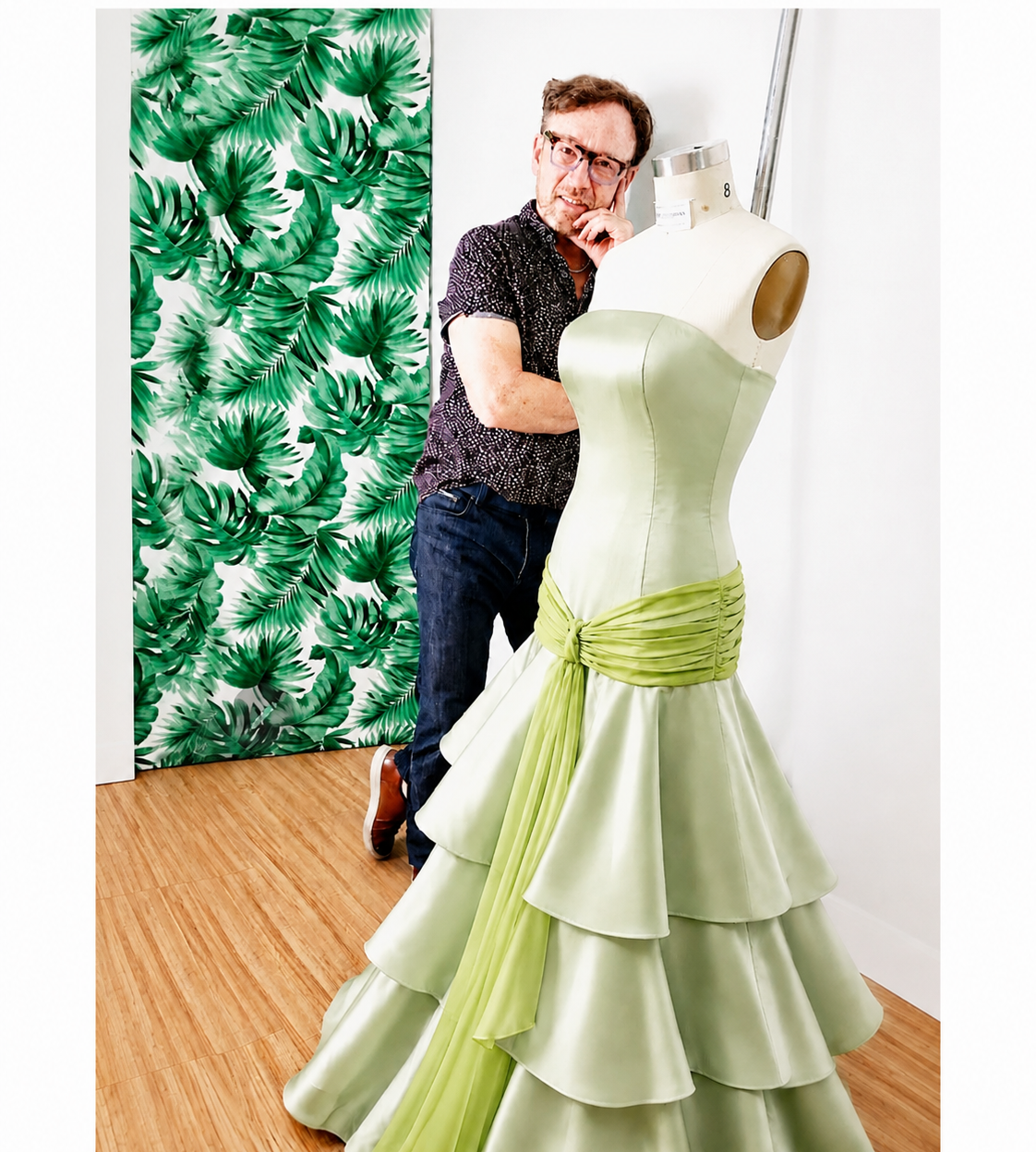
By Samy Gicherman | The Art of Dressing
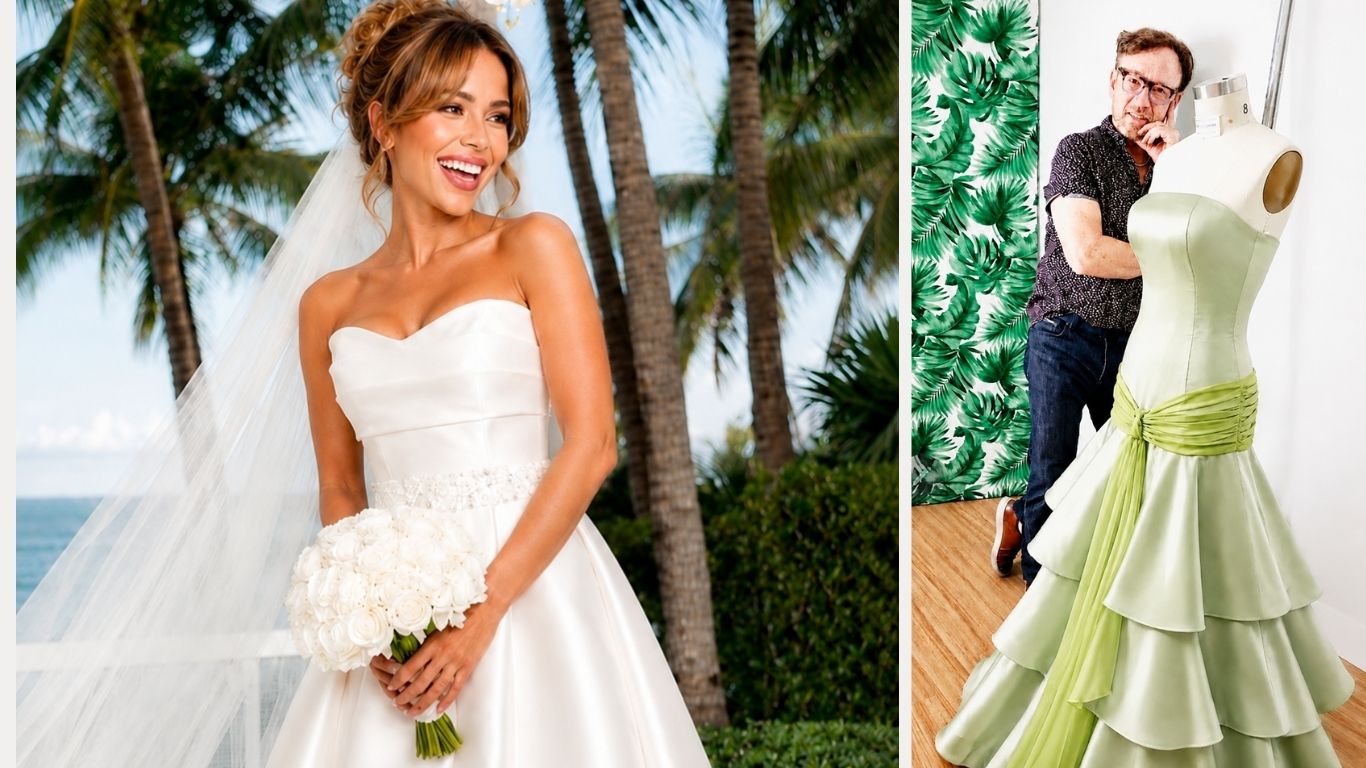
There are dresses that look beautiful on a hanger. And then there are dresses that truly come alive only when a woman steps into them.
For me, that is where the real magic begins.
After so many years designing for women, I have learned that the secrets of the perfect dress are rarely found in one dramatic element. They are not simply about an extraordinary fabric, a flattering neckline, or an impeccable silhouette. The difference lies in the accumulation of small decisions that work together so seamlessly that a woman does not merely look beautiful—she feels different.
And for a designer, that difference is everything.
When I create a dress, I am not only thinking about how I want it to look. I think about how I want the woman to feel when she enters a room, when she walks, when she sits, when someone notices her, and most importantly, when she looks at herself in the mirror.
Because the perfect dress should never overpower the woman wearing it.
It should reveal her.
The Perfect Dress Begins With Proportion
Before color, before embellishment, and even before accessories, I look at proportion.
Every body has its own architecture.
The shoulders, waist, length of the torso, hips, and legs create completely different visual lines from one woman to another. That is why I have never believed that the same dress can flatter every woman in exactly the same way.
A few centimeters can change everything.
A waistline placed slightly higher can visually lengthen the legs. A sleeve ending at the right point can refine the arm. One neckline can elongate and soften the face, while another can create structure and strength.
Sometimes a dress does not need to be redesigned.
It simply needs to meet the body at exactly the right place.
Fit Is the Real Luxury
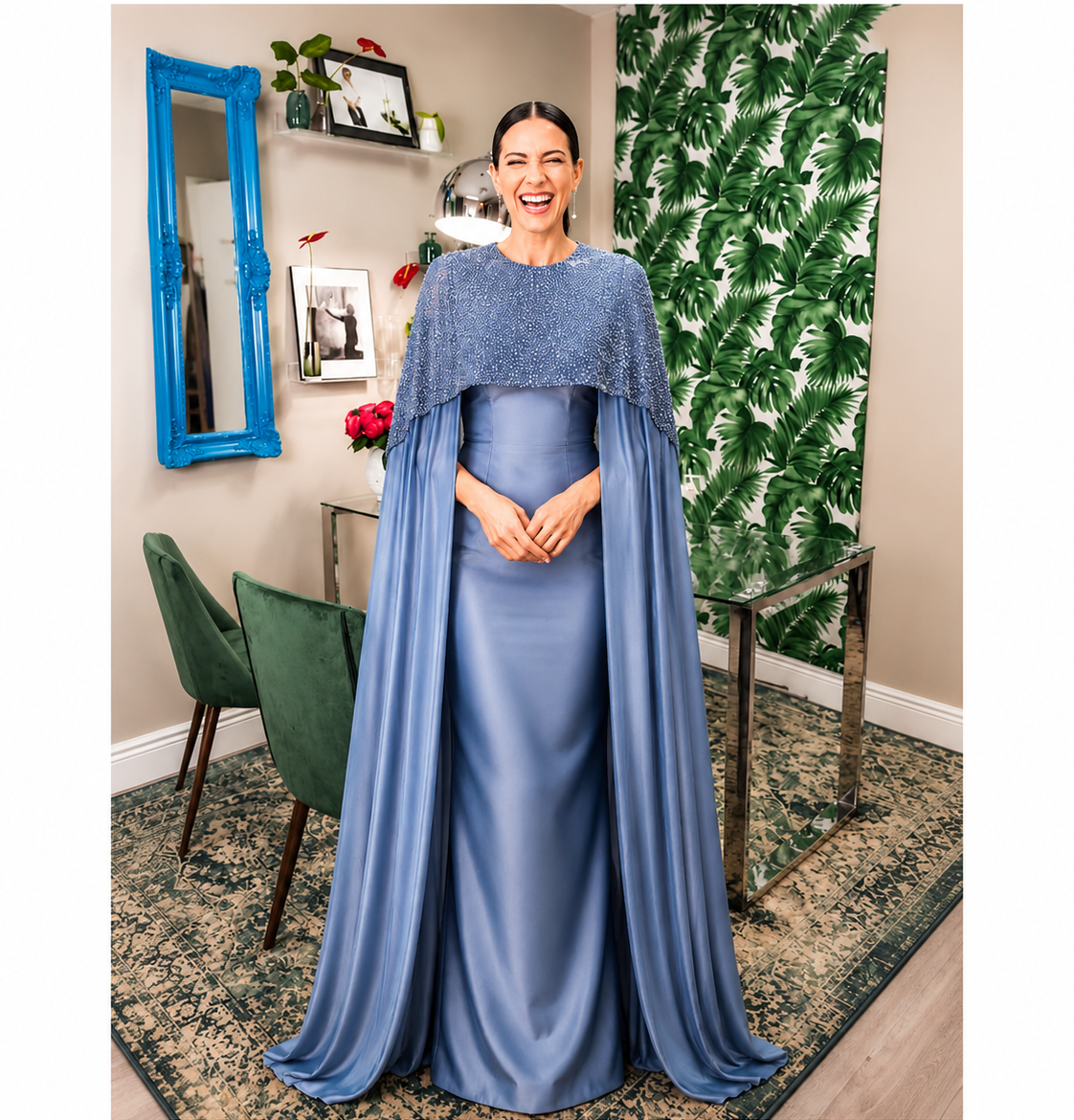
We talk constantly about luxury in fashion, but to me there is a form of luxury that requires no logo and no explanation: a garment that looks as though it were created specifically for the woman wearing it.
That is great fit.
I can work with a magnificent fabric, add hand-finished embroidery, or build a spectacular silhouette, but if the dress pulls across the bust, wrinkles where it should not, or needs to be adjusted every few minutes, something essential has been lost.
A woman should be able to forget about her dress.
She should be able to walk, talk, dance, embrace someone, and enjoy an evening without constantly thinking about what she is wearing.
Ironically, when a dress fits perfectly, people stop noticing the construction and begin noticing the woman.
That, to me, is elegance.
Fabric Must Have a Conversation With the Body
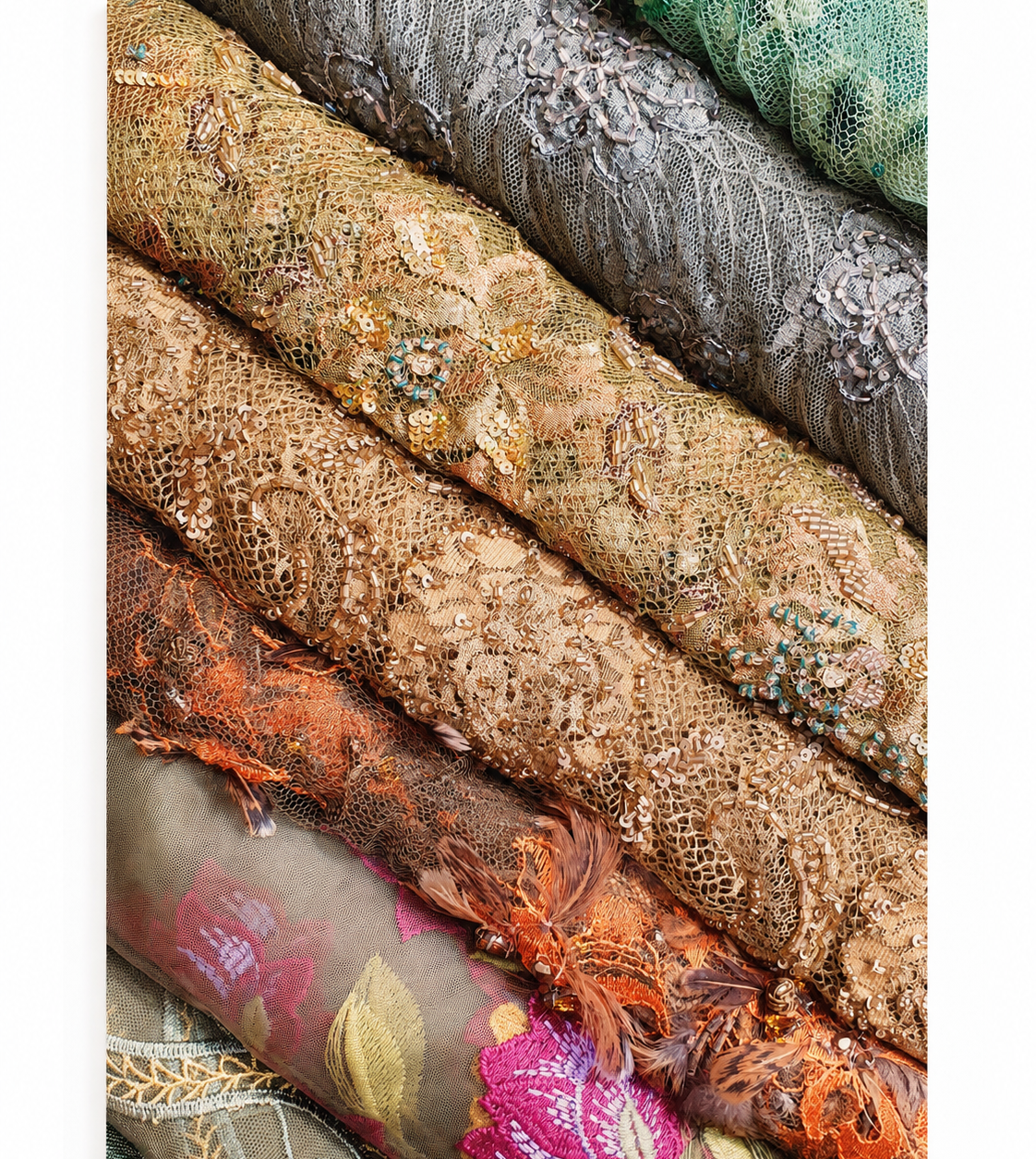
Fabrics speak.
Some move beautifully. Others create structure. Some catch the light dramatically, while others absorb it and offer a quieter kind of sophistication.
I would never choose a fabric simply because it is beautiful.
I have to ask what I want it to do.
Do I want it to follow the body? Build a silhouette? Float when a woman walks? Hold an architectural shape throughout the evening?
Silk, crepe, mikado, chiffon, lace, and velvet can tell completely different stories even when they are used with a similar pattern.
One of the secrets of the perfect dress is allowing a fabric to do what it was designed to do instead of forcing it to become something it is not.
The Neckline Can Change a Woman’s Entire Expression
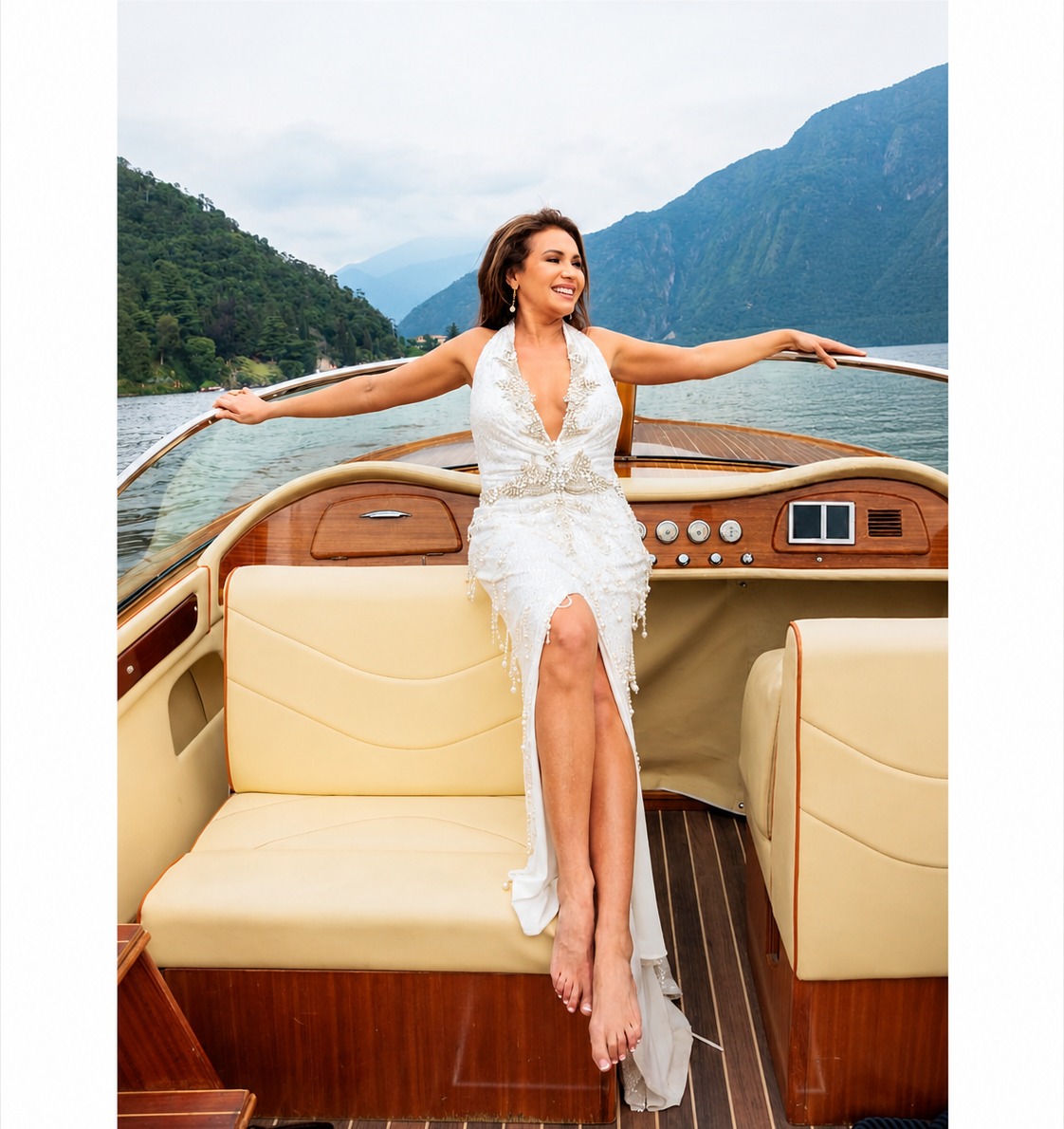
I always pay close attention to the area surrounding the face.
The neckline immediately establishes the relationship between a dress and the woman wearing it. It can feel romantic, sensual, dramatic, classic, or extremely modern.
More importantly, it can transform posture and proportion.
A V-neck can create length. An off-the-shoulder neckline can emphasize the neck and collarbone while introducing romance. A higher neckline can communicate strength and sophistication. An asymmetrical neckline can introduce movement before the woman has taken a single step.
And sensuality is not determined by how much we reveal.
Quite often, what we choose to suggest is far more powerful than what we show completely.
What Happens Inside the Dress Matters Too
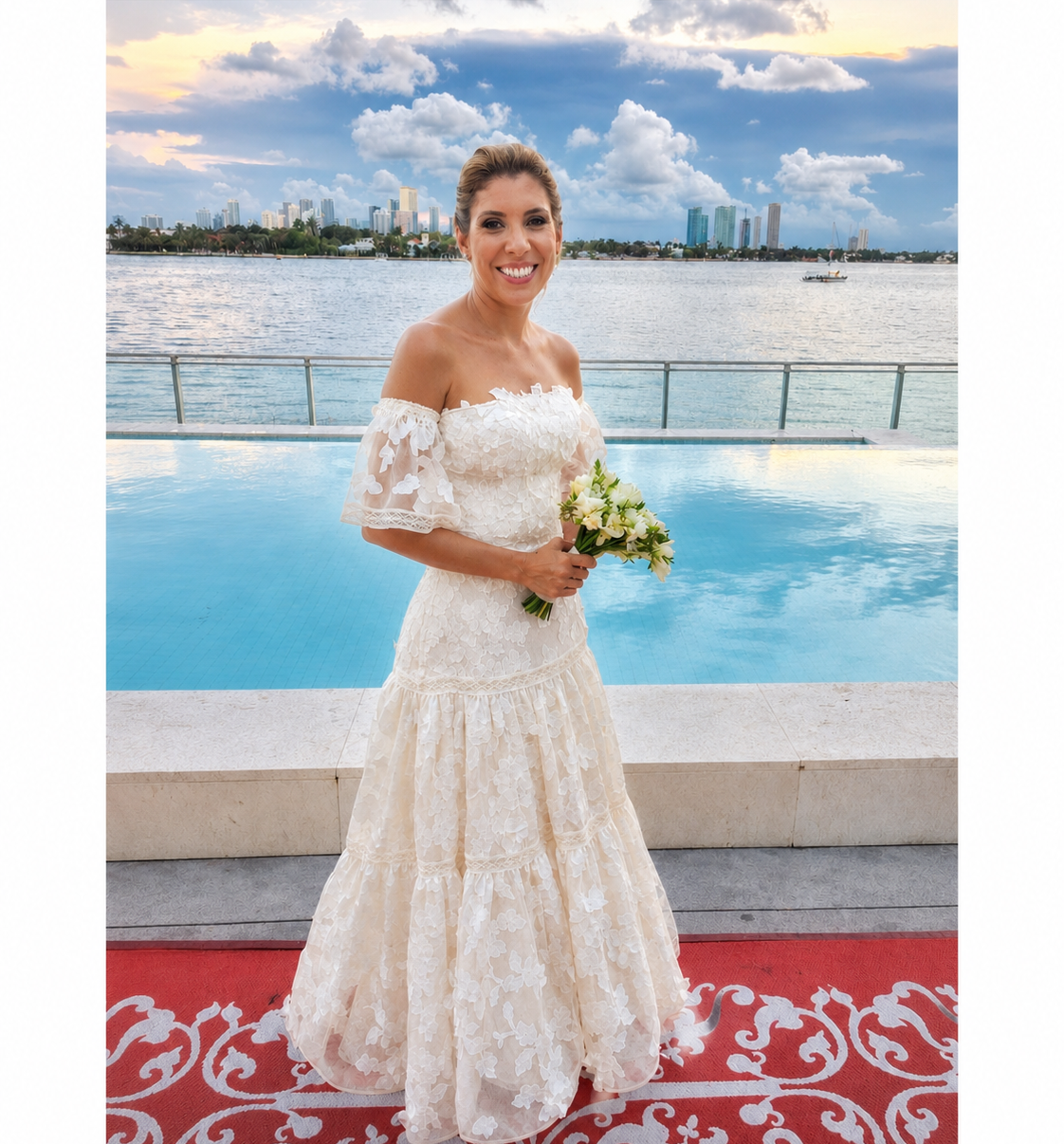
One of the details the public rarely sees is also one of the things that matters most to me as a designer: the internal construction.
A beautifully made dress has an invisible architecture.
Seams, linings, cups, corsetry, closures, and subtle reinforcements may be responsible for creating a silhouette that appears effortless, even when there is tremendous technical work behind it.
For me, the inside of a garment says a great deal about the quality of its design.
I have always believed that a truly well-made dress should be beautiful even when you turn it inside out.
No one may see that workmanship during a gala or celebration.
But the woman wearing it will feel it.
Every Detail Needs a Reason to Be There
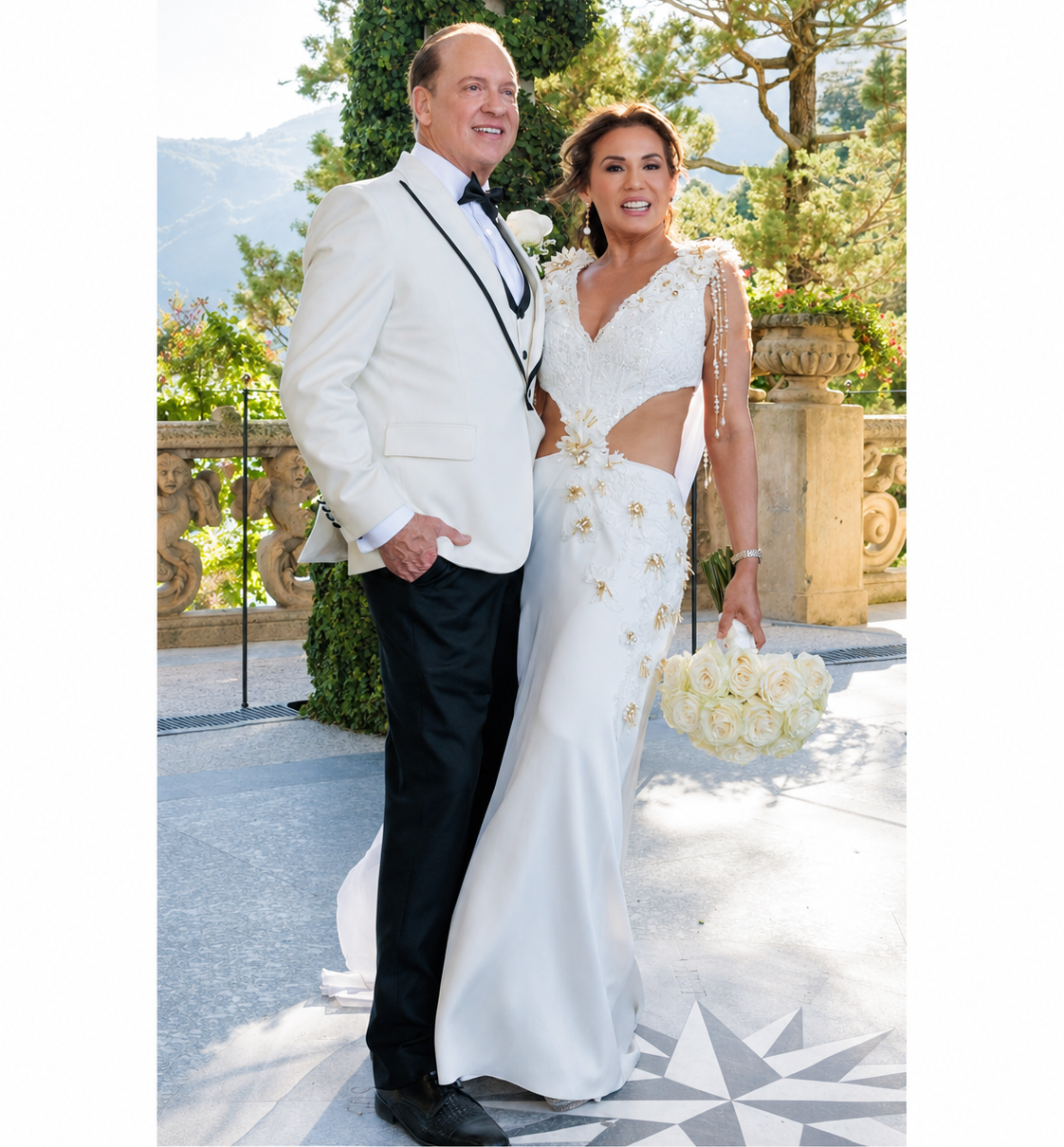
I love details.
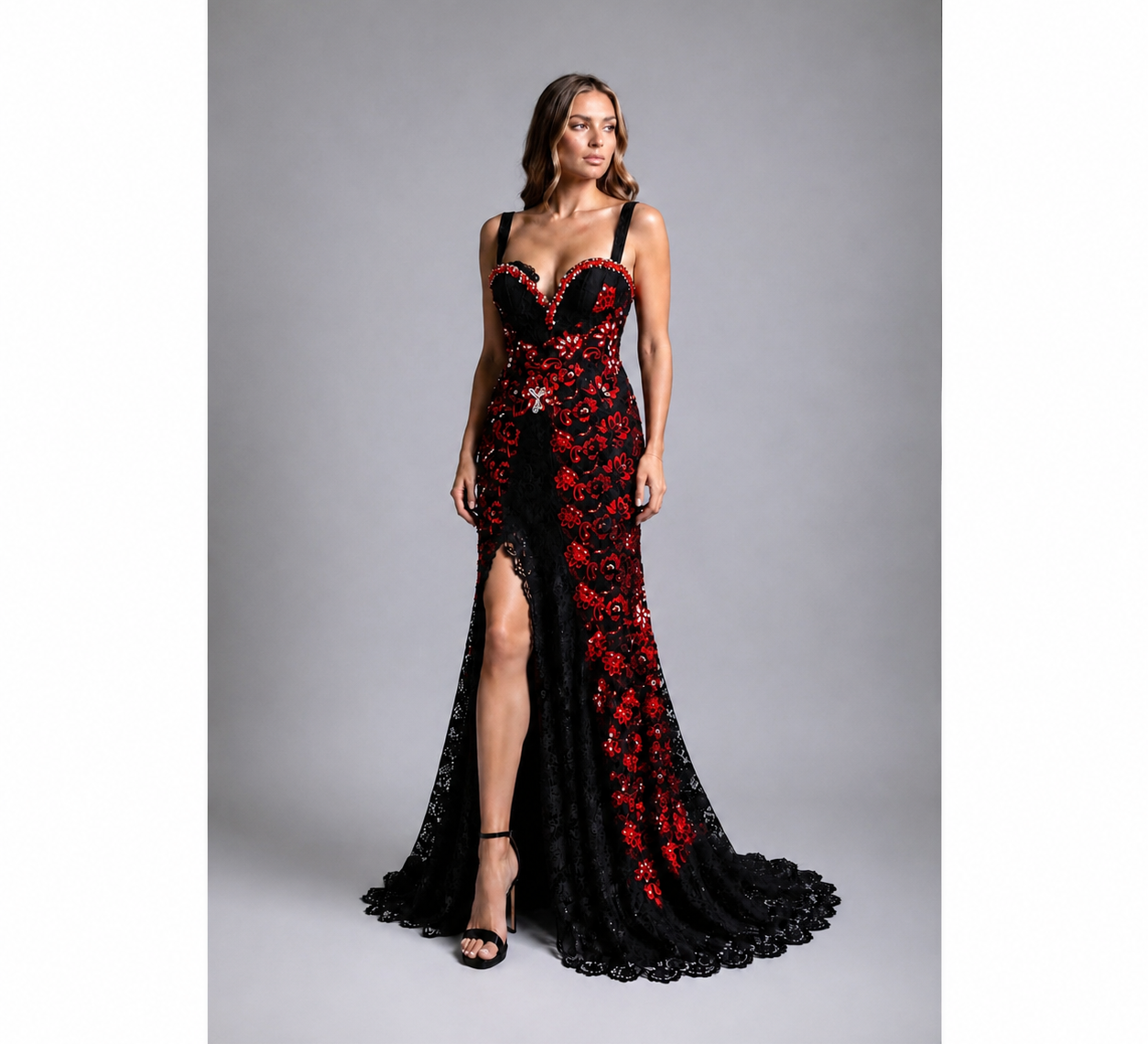
Embroidery, appliqués, draping, transparency, beading, and unexpected elements can turn a dress into something extraordinary. But there is an enormous difference between decorating a garment and designing one.
Every detail must justify its presence.
When I add volume, I want that volume to create a line. When I use crystals or embellishment, I want them to interact with light and movement. When I introduce draping, it must flatter the body while also contributing beauty.
The human eye instinctively recognizes balance.
We may not always know how to explain why something works.
We simply know that it does.
And often, that reaction comes from small design decisions that are almost invisible.
The Right Color Should Illuminate the Woman
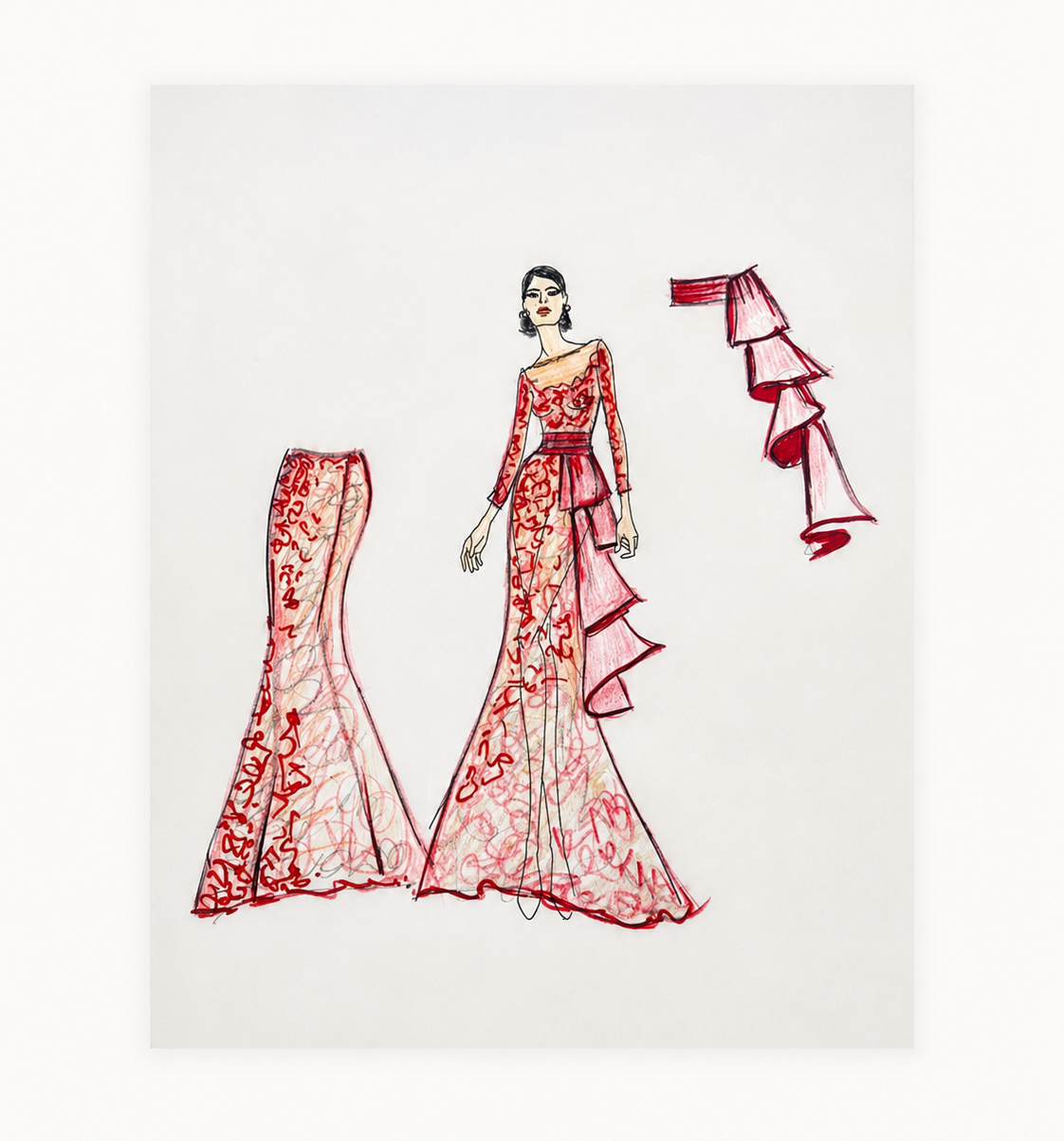
I am always fascinated by the transformation that happens when a woman finds the right color.
Some shades immediately illuminate the complexion. Others, no matter how fashionable they may be at the moment, can take life away from the face.
That is why I do not believe a woman should choose a dress simply because a particular color is trending.
Fashion can suggest.
The woman should decide.
Some colors project authority. Others communicate softness. Red can be extraordinarily powerful. Black remains one of the great masters of sophistication. Pastels can have tremendous presence when the construction is right, and white can be every bit as dramatic as a saturated shade.
But the best color is the one that makes us see the woman first and remember the dress afterward.
Movement Is Part of the Design
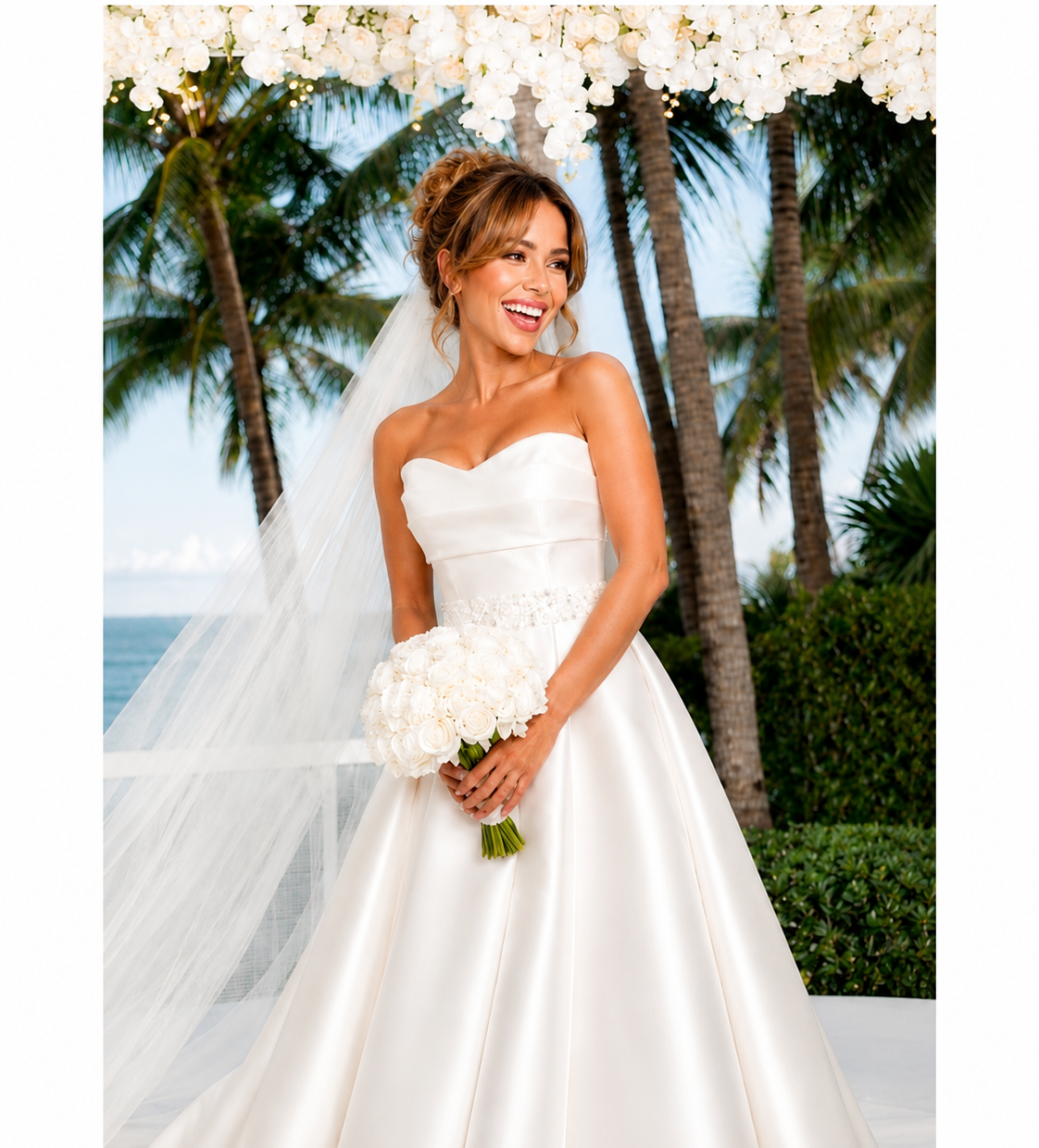
One of my favorite moments in the creative process happens when the woman begins to walk in the dress.
That is when I discover things that a fitting in front of a mirror can never show me.
A dress is not a sculpture.
It lives in movement.
I watch how the skirt falls, how the fabric reacts, how the sleeves behave, how a slit appears as she walks, or how light discovers certain details.
Sometimes something that looked perfect while standing still needs to change completely once it begins to move.
A dress must be considered from every angle.
More importantly, it must have life.
Personality Is the One Detail a Designer Cannot Manufacture
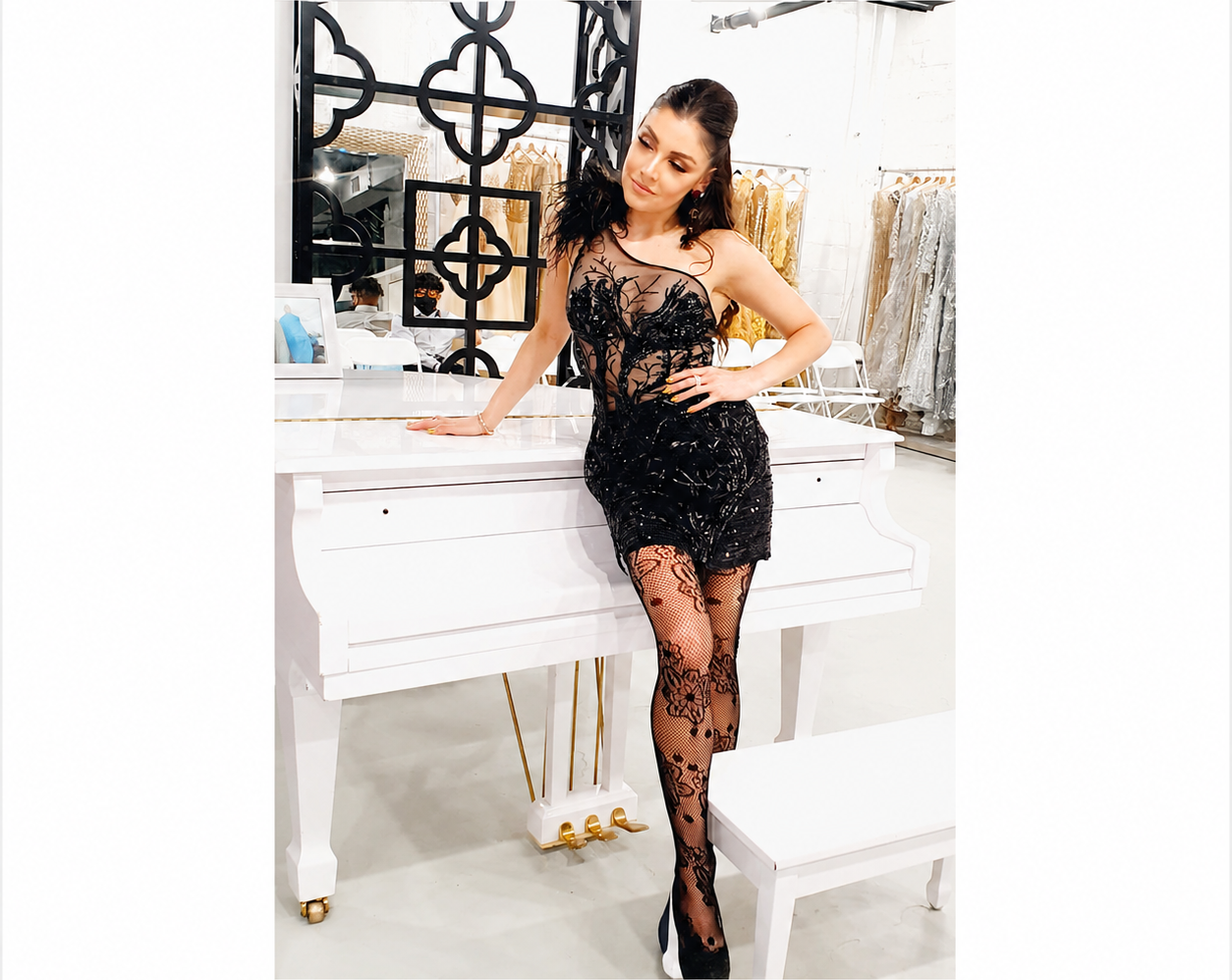
I can design the silhouette. I can choose the fabric. I can study proportion, construct the interior, and spend hours refining every detail.
But there is one thing I cannot design for a woman: her attitude.
I have watched extraordinarily simple dresses become unforgettable because the woman wearing them felt confident, beautiful, and completely herself.
I have also seen spectacular garments lose their power because the woman inside them felt as though she were playing a character.
That is why, when a woman asks me what the perfect dress would be for her, I do not only want to know her size or the event she is attending.
I want to know her.
I want to understand how she sees herself.
What she wants to emphasize.
What she would rather keep subtle.
And, above all, how she wants to feel.
The Final Secret: You Should Still Look Like Yourself

Trends change.
Hemlines rise and fall. New colors emerge. Proportions evolve, and fashion finds new ways to interpret femininity. That constant evolution is part of what keeps fashion fascinating.
But after a lifetime devoted to design, I still believe that the perfect dress should never transform a woman into someone else.
It may make her feel more elegant.
More confident.
More sensual.
More powerful.
But she should still recognize the woman looking back at her in the mirror.
Because ultimately, the purpose of a great dress is not to make people say:
“What a beautiful dress.”
The real triumph is when they say:
“She looks extraordinary.”
And that small difference may be the greatest secret of all.
— Samy Gicherman
Follow my brand on Instagram: @SamyGicherman
Photo Credits: Courtesy of Samy Gicherman PR
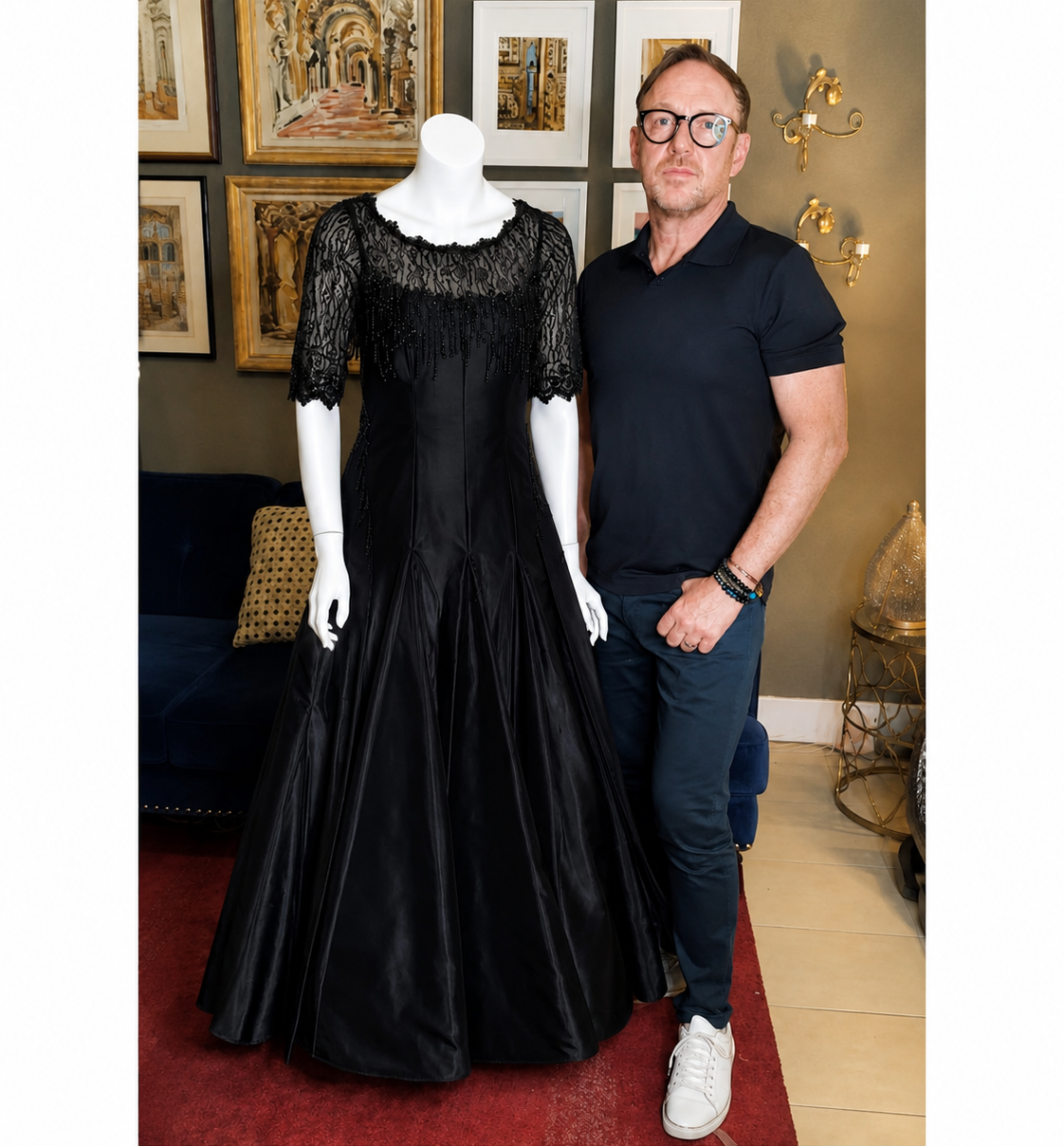
“For Samy Gicherman, fashion lives in the details—the cut, the texture, the finish, and the emotion a garment leaves behind.”
— Miami Fashion Spotlight
#SponsoredPost
Spanish Version.
Los secretos de un vestido perfecto: detalles que marcan la diferencia
Por Samy Gicherman | The Art of Dressing
Hay vestidos que son hermosos en una percha. Y hay otros que realmente cobran vida cuando una mujer se los pone. Para mí, allí comienza la verdadera magia.
Después de tantos años diseñando para mujeres, he aprendido que los secretos de un vestido perfecto rara vez se encuentran en un solo elemento espectacular. No dependen únicamente de una tela extraordinaria, de un escote favorecedor o de una silueta impecable. La diferencia está en la suma de pequeñas decisiones que trabajan en armonía hasta conseguir que una mujer no solamente se vea hermosa, sino que se sienta diferente.
Y para un diseñador, esa diferencia lo es todo.
Cuando creo un vestido, no pienso únicamente en cómo quiero que se vea. Pienso en cómo quiero que se sienta la mujer cuando entre a una habitación, cuando camine, cuando se siente, cuando alguien la observe y, sobre todo, cuando ella misma se mire al espejo.
Porque el vestido perfecto nunca debería eclipsar a la mujer que lo lleva. Debería revelarla.
El vestido perfecto comienza con la proporción
Antes del color, antes de los bordados e incluso antes de los accesorios, observo la proporción. Cada cuerpo tiene su propia arquitectura.
Los hombros, la cintura, el largo del torso, las caderas y las piernas crean líneas completamente diferentes de una mujer a otra. Por eso nunca he creído que un mismo vestido pueda favorecer exactamente de la misma manera a todo el mundo. Unos pocos centímetros pueden cambiarlo todo.
Una cintura colocada ligeramente más arriba puede alargar visualmente las piernas. Una manga que termine en el punto correcto puede estilizar el brazo. Un escote puede alargar y suavizar el rostro, mientras otro puede aportar estructura y fuerza.
A veces, el vestido no necesita ser rediseñado. Simplemente necesita encontrarse con el cuerpo en el lugar exacto.
El fit es el verdadero lujo
En moda hablamos constantemente de lujo, pero para mí existe una forma de lujo que no necesita logotipos ni explicaciones: una prenda que parece haber sido creada específicamente para la mujer que la lleva. Eso es un buen fit.
Puedo trabajar con una tela magnífica, añadir bordados hechos a mano o construir una silueta espectacular, pero si el vestido tira en el busto, forma arrugas donde no debería o necesita acomodarse constantemente, hemos perdido algo esencial.
Una mujer debería poder olvidarse de su vestido. Debería poder caminar, conversar, bailar, abrazar y disfrutar de una noche sin pensar constantemente en lo que lleva puesto.
Paradójicamente, cuando un vestido queda perfecto, las personas dejan de notar la construcción y comienzan a observar a la mujer. Eso, para mí, es elegancia.
La tela debe conversar con el cuerpo
Las telas hablan. Algunas tienen movimiento. Otras crean estructura. Algunas reflejan la luz de manera espectacular, mientras otras la absorben y transmiten una sofisticación mucho más silenciosa.
Nunca escogería un tejido únicamente porque sea bello. Tengo que preguntarme qué quiero que haga.
¿Quiero que siga las curvas del cuerpo? ¿Que construya una silueta? ¿Qué flote mientras la mujer camina? ¿Que mantenga una forma arquitectónica durante toda la noche?
La seda, el crepé, el mikado, el chiffon, el encaje y el terciopelo pueden contar historias completamente diferentes incluso cuando parten de un patrón similar.
Uno de los secretos de un vestido perfecto consiste en permitir que la tela haga aquello para lo que fue creada, en lugar de obligarla a convertirse en algo que no es.
El escote puede cambiar toda la expresión de una mujer
Siempre presto mucha atención al área que rodea el rostro. El escote establece inmediatamente una relación entre el vestido y la mujer que lo lleva. Puede sentirse romántico, sensual, dramático, clásico o extremadamente moderno. Pero, más importante aún, puede transformar visualmente la postura y las proporciones.
Un escote en V puede crear longitud. Un escote fuera de los hombros puede destacar el cuello y las clavículas mientras aporta romanticismo. Una línea alta puede comunicar fuerza y sofisticación. Un escote asimétrico puede crear movimiento incluso antes de que la mujer haya dado el primer paso.
Y la sensualidad tampoco depende de cuánto mostramos. Muchas veces, aquello que decidimos sugerir resulta mucho más poderoso que aquello que revelamos por completo.
Lo que sucede dentro del vestido también importa
Uno de los detalles que el público rara vez ve es precisamente uno de los que más me importan como diseñador: la construcción interna.
Un vestido bien hecho tiene una arquitectura invisible. Costuras, forros, copas, corsetería, cierres y pequeños refuerzos pueden ser responsables de crear una silueta que parece effortless, aunque detrás de ella exista un enorme trabajo técnico. Para mí, el interior de una prenda dice mucho sobre la calidad de su diseño.
Siempre he pensado que un vestido verdaderamente bien confeccionado debería ser hermoso incluso cuando lo miramos del revés. Tal vez nadie vea esa parte durante una gala o una celebración. Pero la mujer puede sentirla.
Cada detalle debe tener una razón para existir
Me encantan los detalles. Los bordados, las aplicaciones, los drapeados, las transparencias, la pedrería y los elementos inesperados pueden convertir un vestido en algo extraordinario. Sin embargo, existe una diferencia enorme entre decorar una prenda y diseñarla.
Cada detalle debe justificar su presencia. Cuando añado volumen, quiero que ese volumen cree una línea. Cuando utilizo cristales o aplicaciones, quiero que dialoguen con la luz y con el movimiento. Cuando incorporo un drapeado, debe favorecer el cuerpo además de aportar belleza. El ojo humano reconoce instintivamente el equilibrio.
No necesariamente sabemos explicar por qué algo funciona. Simplemente sabemos que funciona. Y muchas veces esa sensación proviene de decisiones de diseño tan sutiles que casi pasan inadvertidas.
El color correcto debe iluminar a la mujer
Siempre me fascina observar la transformación que ocurre cuando una mujer encuentra su color. Hay tonos que iluminan inmediatamente la piel. Otros, aunque estén de moda, pueden quitarle vida al rostro.
Por eso no creo que una mujer deba escoger un vestido únicamente porque determinado color sea tendencia. La moda puede sugerir. La mujer debe decidir.
Algunos colores proyectan autoridad. Otros transmiten suavidad. El rojo puede ser extraordinariamente poderoso. El negro continúa siendo uno de los grandes maestros de la sofisticación. Los pasteles pueden tener una enorme presencia cuando la construcción es adecuada, y el blanco puede resultar tan dramático como cualquier tono intenso.
Pero el mejor color es aquel que consigue que primero veamos a la mujer y después recordemos el vestido.
El movimiento también forma parte del diseño
Una de mis partes favoritas del proceso creativo ocurre cuando la mujer comienza a caminar con el vestido. Allí descubro cosas que una prueba frente al espejo nunca podría mostrarme.
Un vestido no es una escultura. Vive en movimiento. Observo cómo cae la falda, cómo responde la tela, cómo se comportan las mangas, cómo aparece una abertura al caminar o cómo la luz encuentra determinados detalles.
En ocasiones, algo que parecía perfecto mientras estaba quieto necesita cambiar completamente cuando comienza a moverse.
Un vestido debe observarse desde todos los ángulos. Y, sobre todo, debe tener vida.
La personalidad es el único detalle que un diseñador no puede fabricar
Puedo crear la silueta. Puedo escoger la tela. Puedo estudiar las proporciones, construir el interior del vestido y pasar horas perfeccionando cada detalle. Pero existe algo que no puedo diseñar por una mujer: su actitud.
He visto vestidos extraordinariamente sencillos convertirse en inolvidables porque la mujer que los llevaba se sentía segura, hermosa y completamente identificada con ellos. También he visto prendas espectaculares perder fuerza porque quien las llevaba sentía que estaba interpretando un personaje.
Por eso, cuando una mujer me pregunta cuál sería el vestido perfecto para ella, no quiero saber únicamente qué talla utiliza o a qué evento asistirá. Quiero conocerla.
Quiero entender cómo se ve a sí misma. Qué desea destacar. Qué prefiere mantener sutil. Y, especialmente, cómo quiere sentirse.
El secreto final: todavía debes sentirte tú
Las tendencias cambian. Los largos suben y bajan. Aparecen nuevos colores. Las proporciones evolucionan y la moda encuentra nuevas maneras de interpretar la feminidad. Esa evolución constante es precisamente una de las razones por las que la moda continúa fascinándonos.
Pero después de toda una vida dedicada al diseño, sigo creyendo que el vestido perfecto nunca debería transformar a una mujer en otra persona.
Puede hacerla sentir más elegante. Más segura. Más sensual. Más poderosa. Pero todavía debe reconocer a la mujer que observa en el espejo.
Porque al final, el propósito de un gran vestido no es conseguir que alguien diga: “Qué vestido tan hermoso.” El verdadero triunfo ocurre cuando dicen: “Qué espectacular se ve ella.”
Y esa pequeña diferencia quizás sea el mayor secreto de todos.
— Samy Gicherman
Craving for more? We recommend:
Carolina Herrera Brings a Venezuelan Fashion Legacy to Miami’s Design District
Cartier Le Chœur des Pierres Celebrates the Art of Gemstones
Louis Vuitton Multipass Bag Debuts as the House’s New Signature Icon for Fall-Winter 2026
FENDI Unveils Maria Grazia Chiuri’s Debut Couture Fall/Winter 2026-2027 Collection in Rome
COVERGIRL Brings Glowing Beauty Trends to Miami Swim Week 2026
Summer Wedding Guest Style Guide: Elegant Occasion Dressing with GR LONDON PARIS
Louis Vuitton Women’s Resort Collection: The Ultimate Luxury Wardrobe for Chic Summer Getaways
Kimi Antonelli Wins the 2026 Miami Grand Prix as Louis Vuitton Celebrates Victory in Style
Lacoste Miami Open 2026 Finals Weekend: Where Sport and Fashion Met in Style