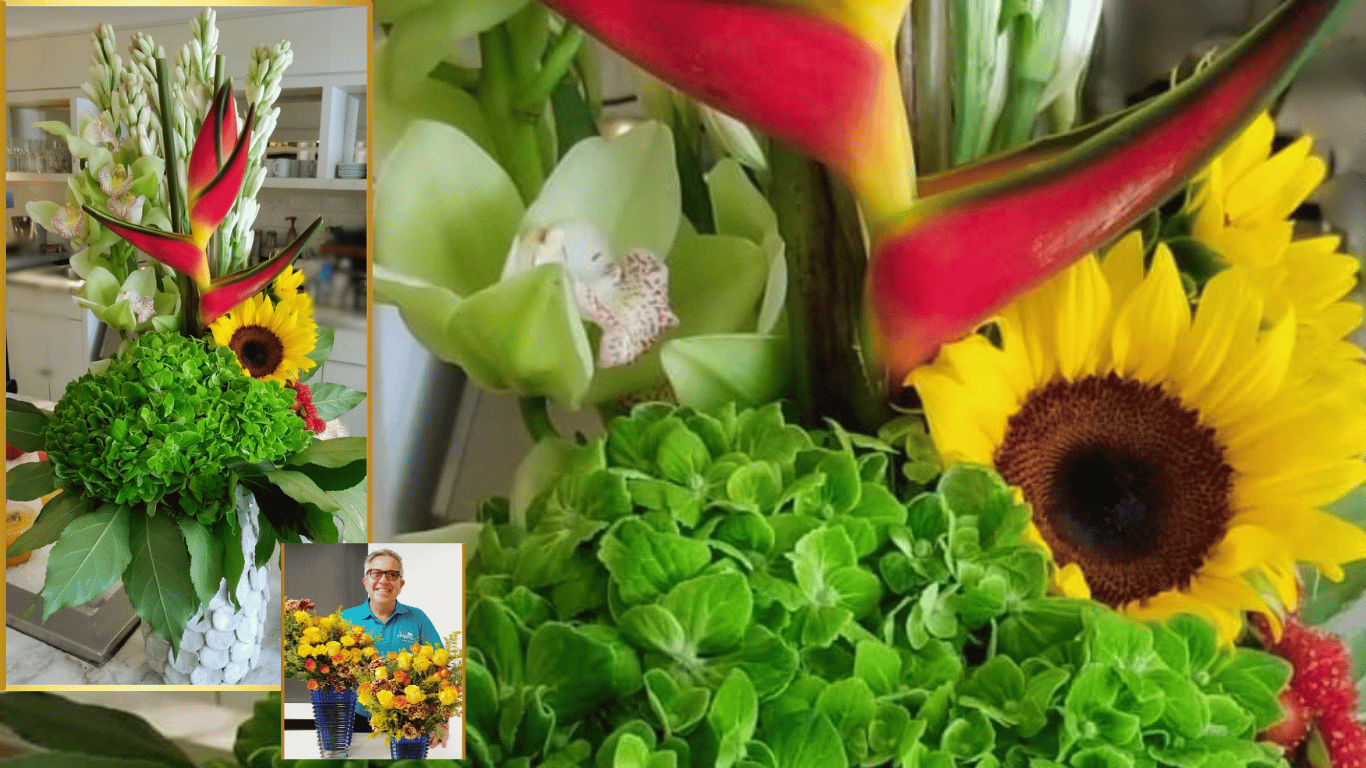
Tropical Greenery & Blooms: An Expert Floral Artist’s Guide to Lush Arrangements
By Francis Yechitch | Designing with Blooms
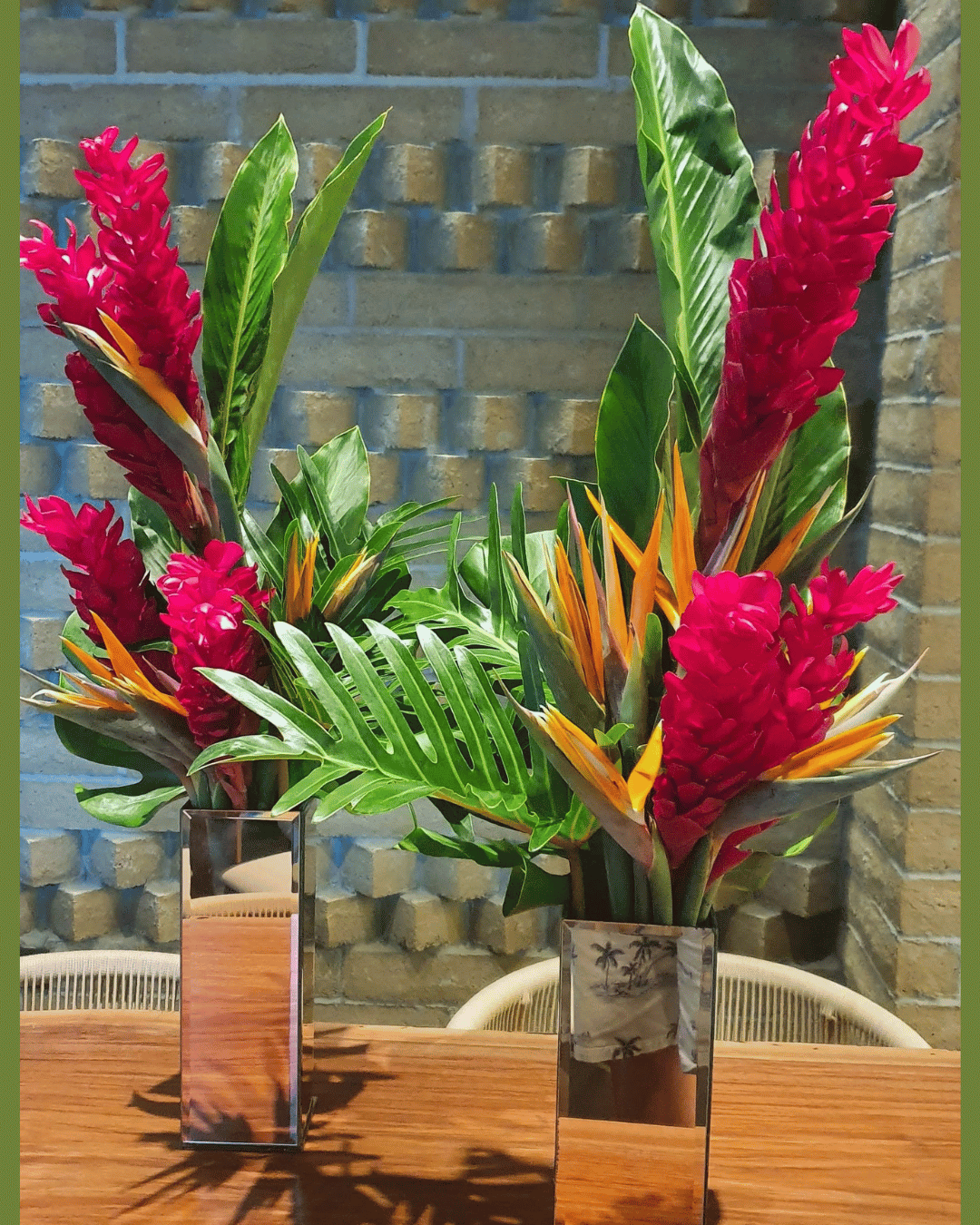
There is something about tropical greenery that belongs naturally to Miami.
Perhaps it is the architecture opening toward gardens and water. Perhaps it is our light—the kind that makes every shade of green appear richer and more saturated. Or perhaps it is simply that, in Miami, nature has never learned how to be discreet.
As a floral and event designer, I have always been fascinated by that sense of abundance.
At Alegria Party Design, I often work with clients who tell me they want something “tropical,” but what they are really asking for is much more specific. They want an arrangement that feels lush without looking wild, glamorous without becoming theatrical, and unmistakably Miami without resembling a themed party.
That distinction is where design begins.
For me, the most beautiful tropical floral arrangements in Miami are created by treating greenery—palms, monstera, philodendron and other sculptural leaves—with the same importance we traditionally give to flowers.
Then I introduce the blooms strategically.
An orchid can create movement. A cluster of roses can bring softness. Anthuriums add structure. And suddenly, what began as a collection of tropical leaves becomes an entire atmosphere.
Tropical Does Not Have to Mean Excess
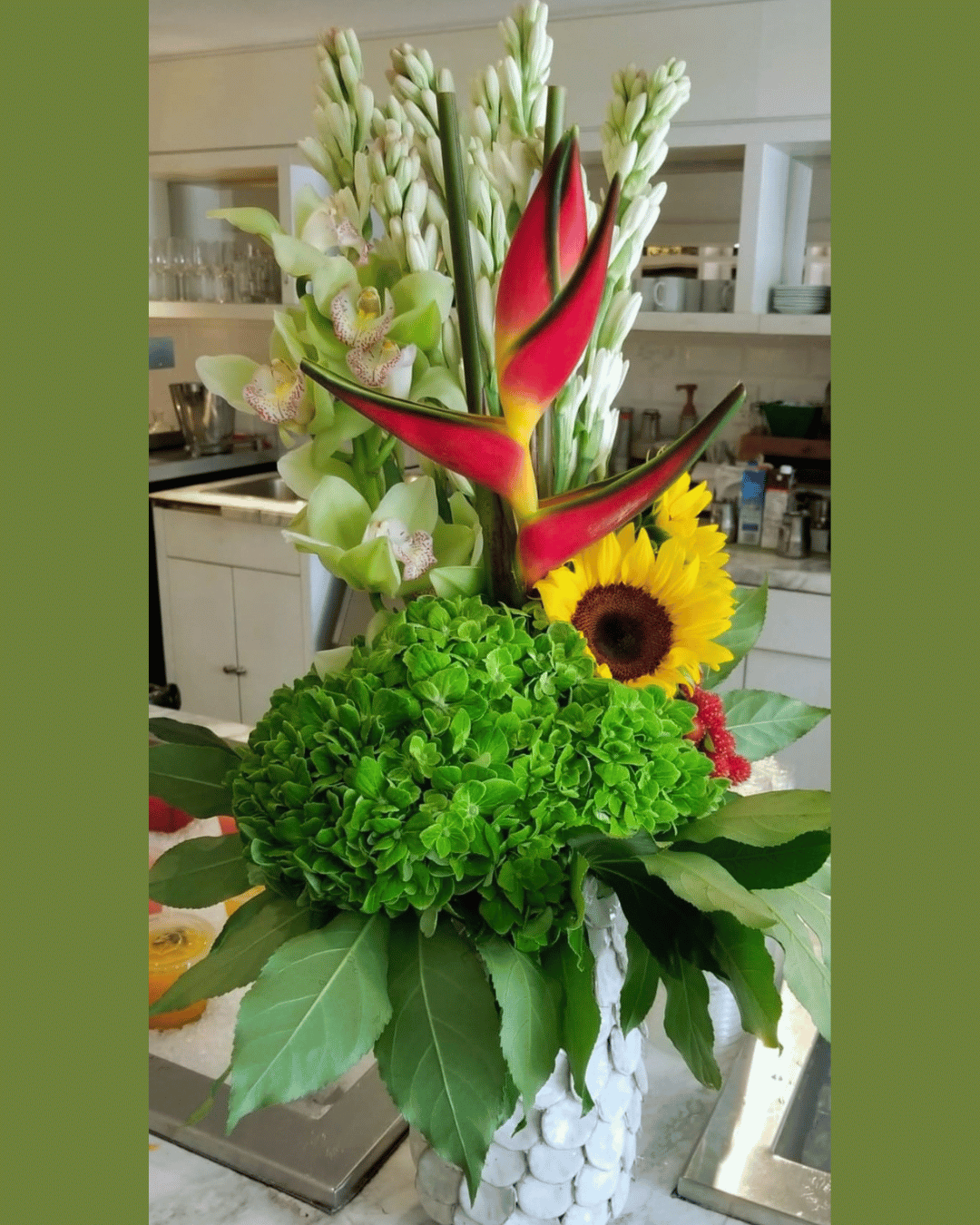
One of the biggest misconceptions about tropical floral design is that everything must be enormous, brightly colored and overflowing.
It does not.
Luxury is often about restraint and editing.
I might use one spectacular monstera leaf instead of five, allowing its shape to become part of the composition. A few carefully positioned palm leaves can create height and movement without overwhelming the table.
The goal is not to show how many tropical elements we can fit into an arrangement.
The goal is to make every element feel intentional.
When I design, I constantly ask myself: Where does the eye need to rest? Where should the arrangement move? What deserves attention?
Those questions are just as important in floral design as they are in interior design.
Start With Greenery and Build the Architecture
When people look at a floral arrangement, they usually notice the flowers first.
As a designer, I often begin somewhere else.
I begin with the greenery.
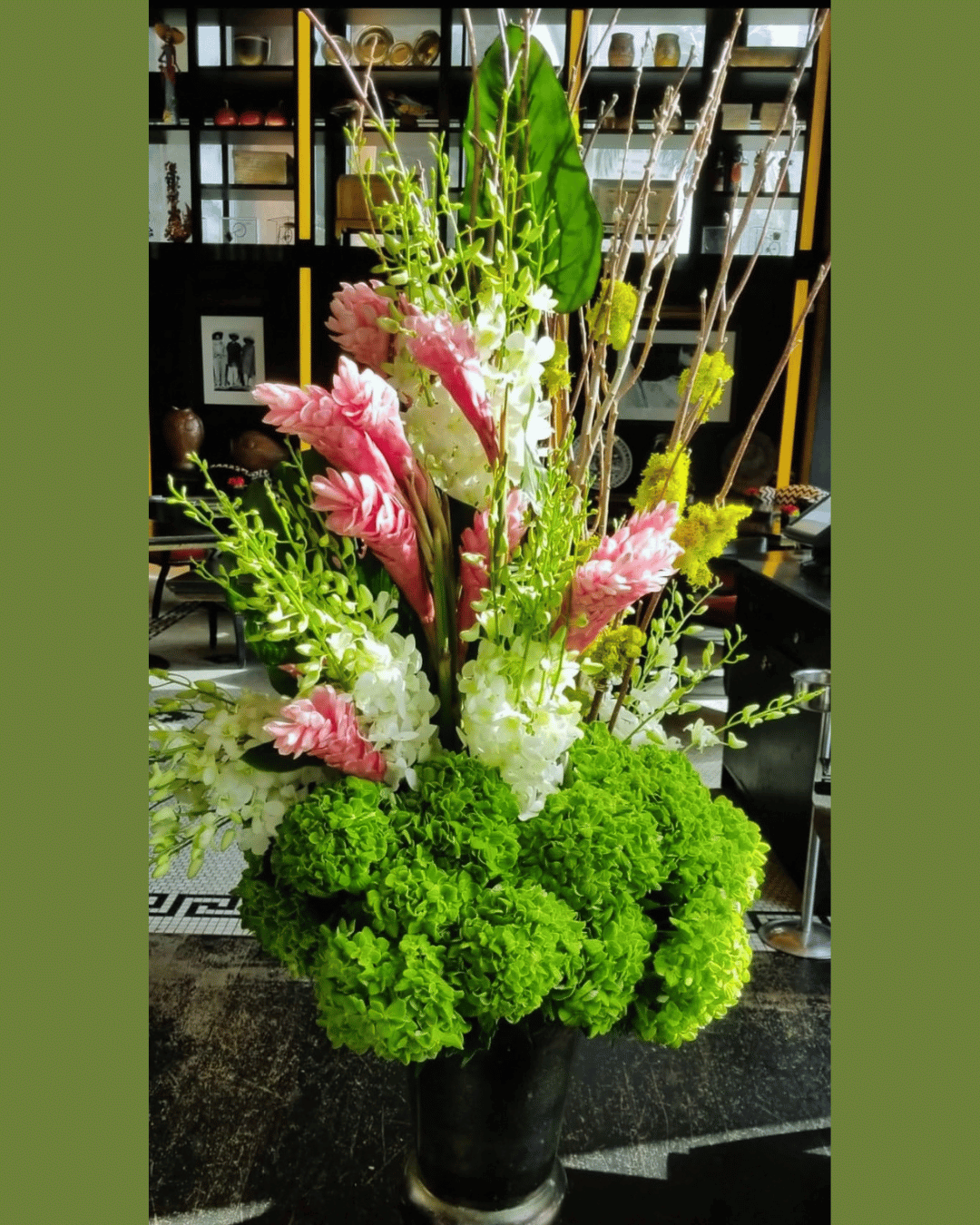
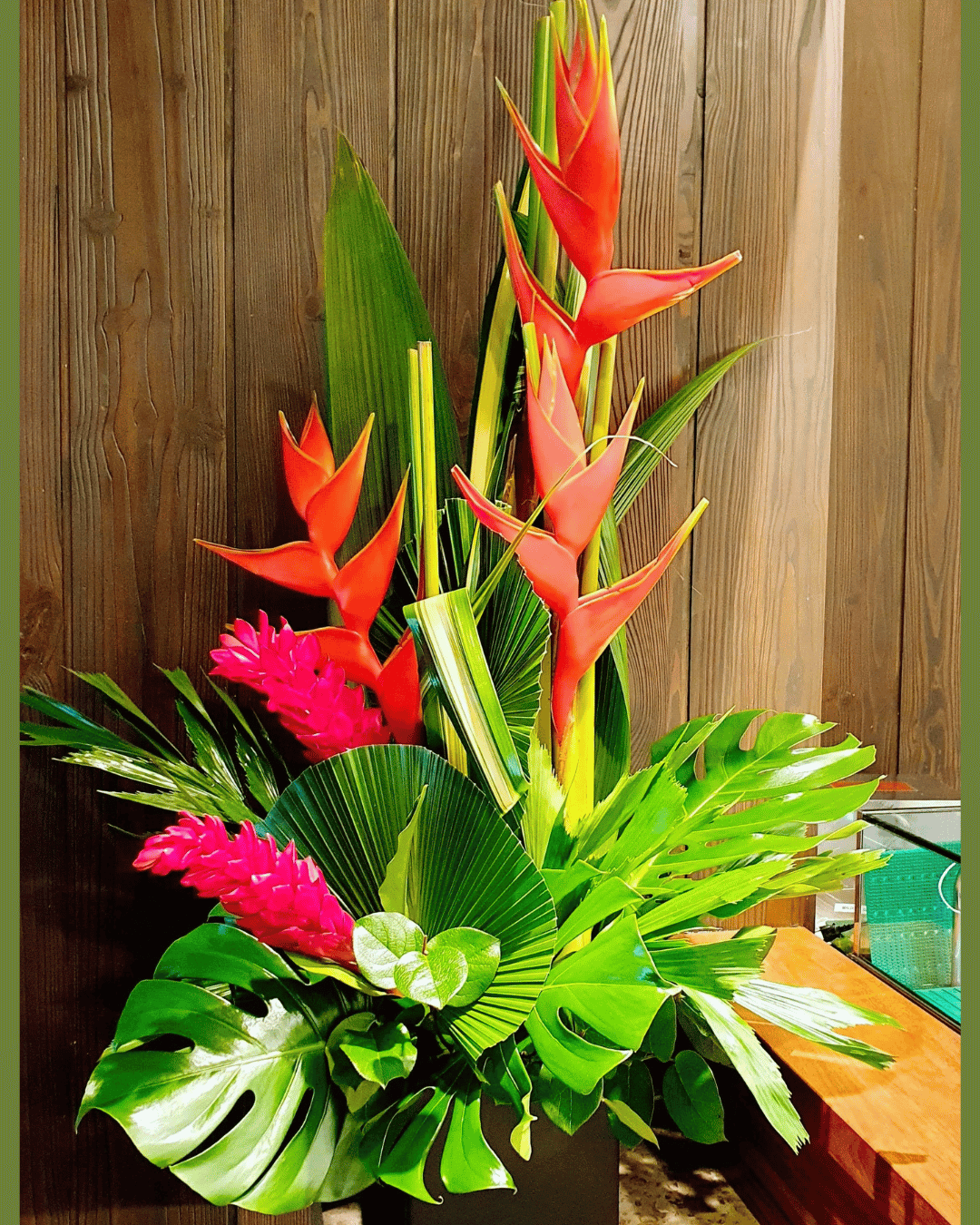
Palms, monstera leaves and sculptural tropical foliage create what I like to call the architecture of the arrangement.
A palm can draw the eye upward.
A monstera leaf can establish an elegant horizontal line.
A curved tropical leaf can introduce movement.
Once that architecture is established, I begin placing flowers within the spaces the greenery has created.
This approach gives an arrangement dimension rather than simply making it look full.
It is also one of my favorite techniques for larger events because greenery has the ability to transform a room before guests ever stop to notice an individual flower.
Orchids Are Miami’s Quiet Luxury
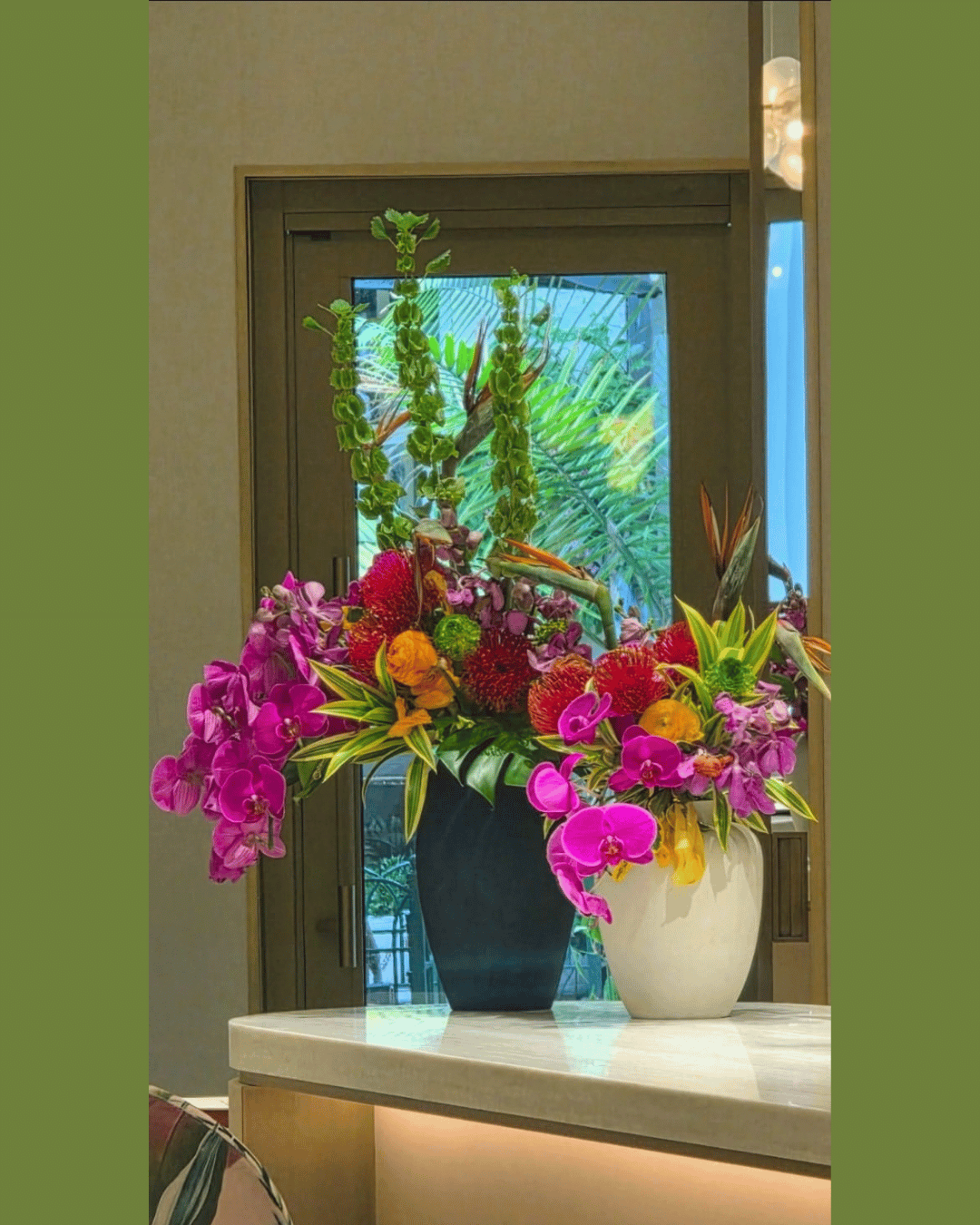
If there is one flower I return to again and again in tropical design, it is the orchid.
Orchids have an extraordinary ability to feel exotic and sophisticated at the same time.
They never need to shout.
A white phalaenopsis orchid cascading between deep green leaves can feel almost architectural. Purple orchids introduce drama, while soft blush varieties bring romance to a tropical palette without sacrificing its modern character.
I especially love working with orchids in Miami homes and events because they connect so effortlessly with our surroundings.
They feel at home beside contemporary interiors, waterfront settings, modern architecture and outdoor celebrations.
My rule is simple: when the greenery already brings drama, let the orchid bring elegance rather than competition.
Monstera Leaves Are More Than a Tropical Symbol
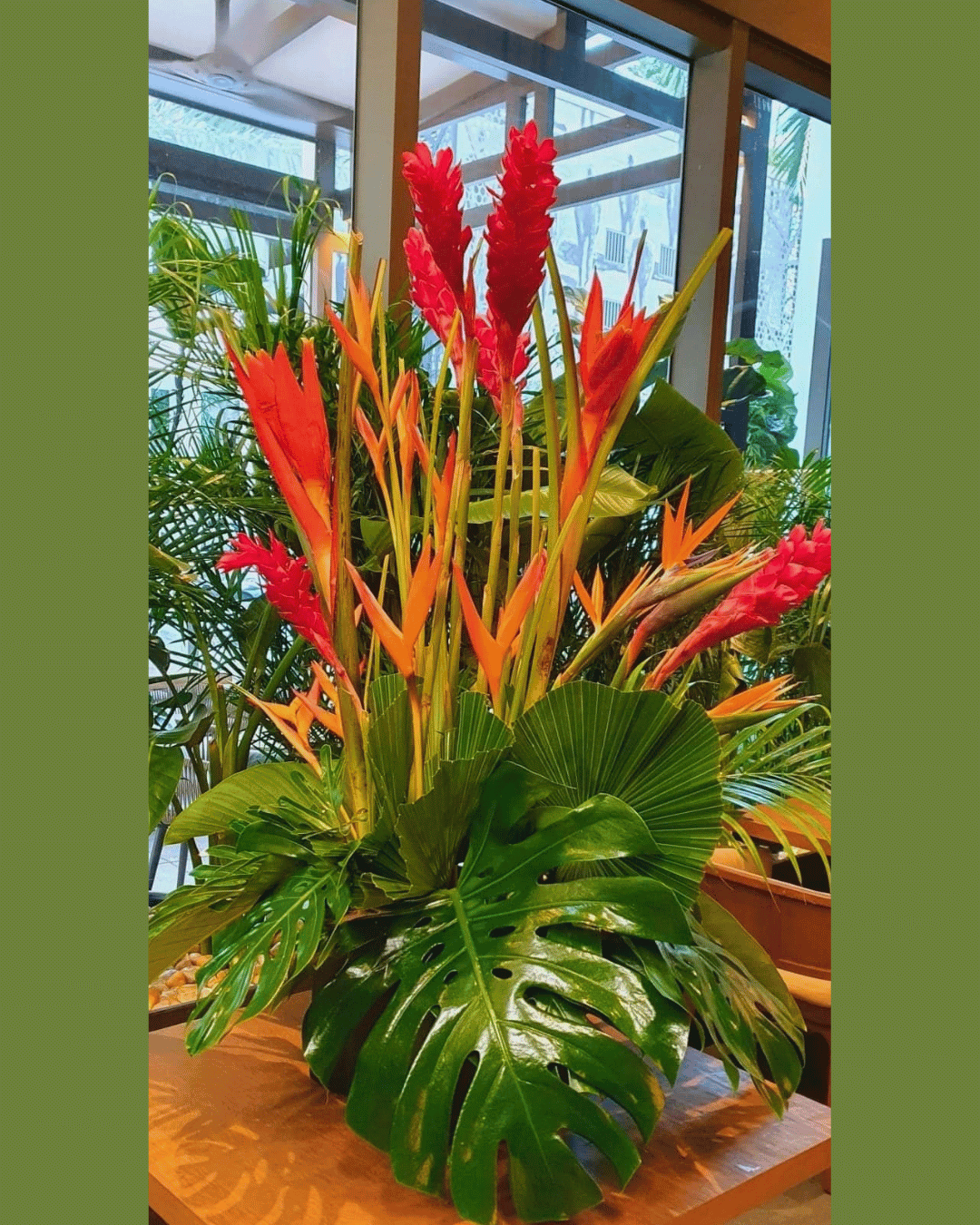
Monstera leaves have become almost synonymous with tropical décor, which is exactly why they need to be used thoughtfully.
When an element becomes instantly recognizable, the designer’s challenge is to make it feel fresh again.
I like to use monstera leaves almost as sculpture.
Their distinctive openings create negative space within an arrangement, something that can be incredibly valuable visually.
Rather than placing them everywhere, I may use one generous leaf at the base of a composition or position it at an unexpected angle to create asymmetry.
The result feels more editorial and less predictable.
In sophisticated tropical design, a monstera leaf should never feel as though it was added simply because the setting is Miami.
It should feel essential to the composition.
Mix Tropical Foliage With Unexpected Flowers
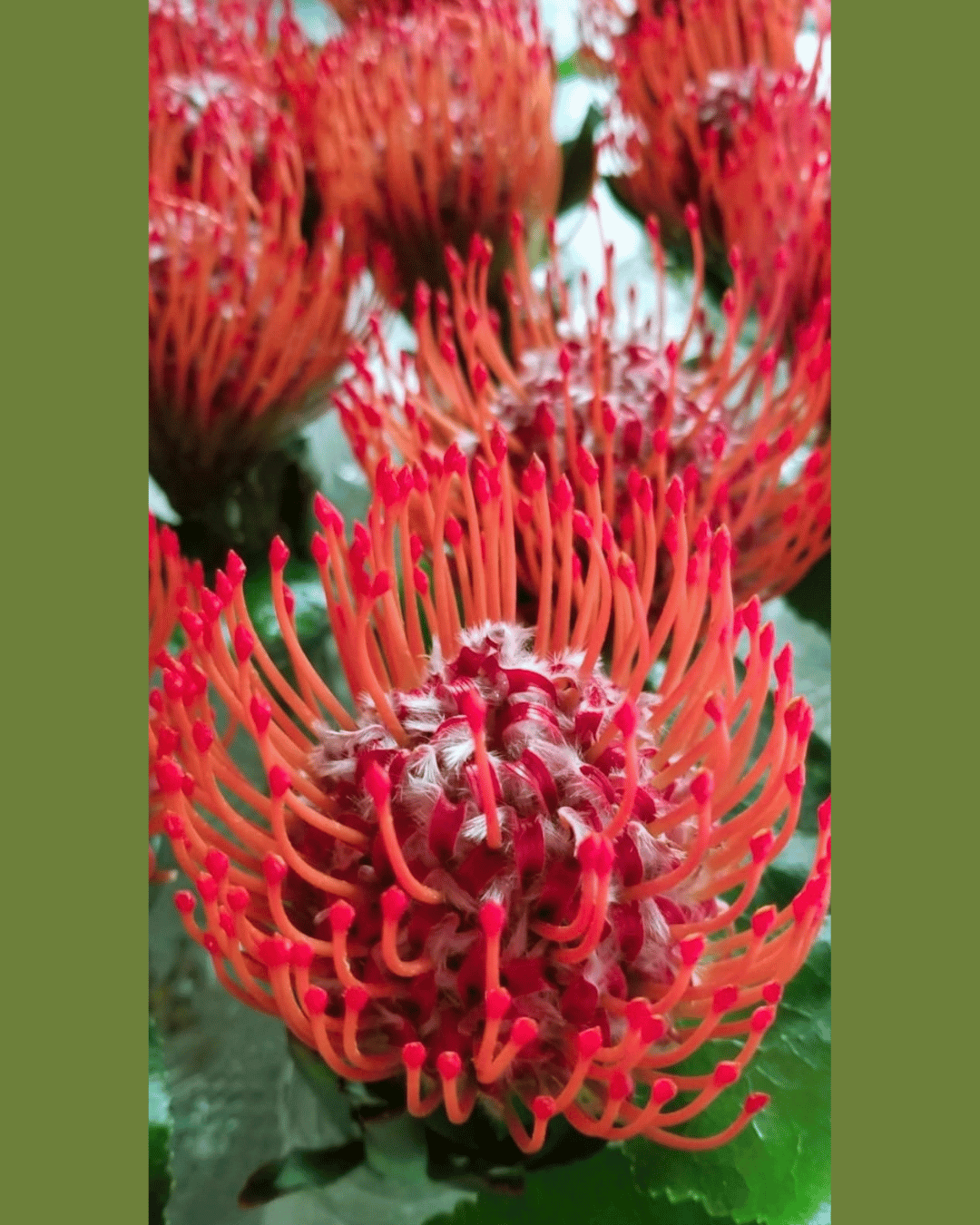
This is where tropical arrangements become truly interesting.
There is no rule that says tropical foliage must be paired only with tropical flowers.
In fact, I often prefer the opposite.
Imagine glossy monstera leaves beside creamy garden roses.
Palm leaves with white hydrangeas.
Orchids floating among delicate ranunculus.
Anthuriums surrounded by softer, more romantic blooms.
These contrasts create visual tension—and beautiful floral design needs a little tension.
The greenery provides strength and structure, while softer flowers introduce romance.
For a wedding, I may soften tropical foliage with white or blush blooms. For a contemporary celebration, I might combine greenery with sculptural flowers and a more restrained palette.
And for a glamorous Miami dinner, I might introduce deeper tones—wine, plum, burnt coral or even touches of chocolate.
Tropical does not dictate the color palette.
It gives us the vocabulary. The designer still writes the story.
Let Miami Influence the Arrangement
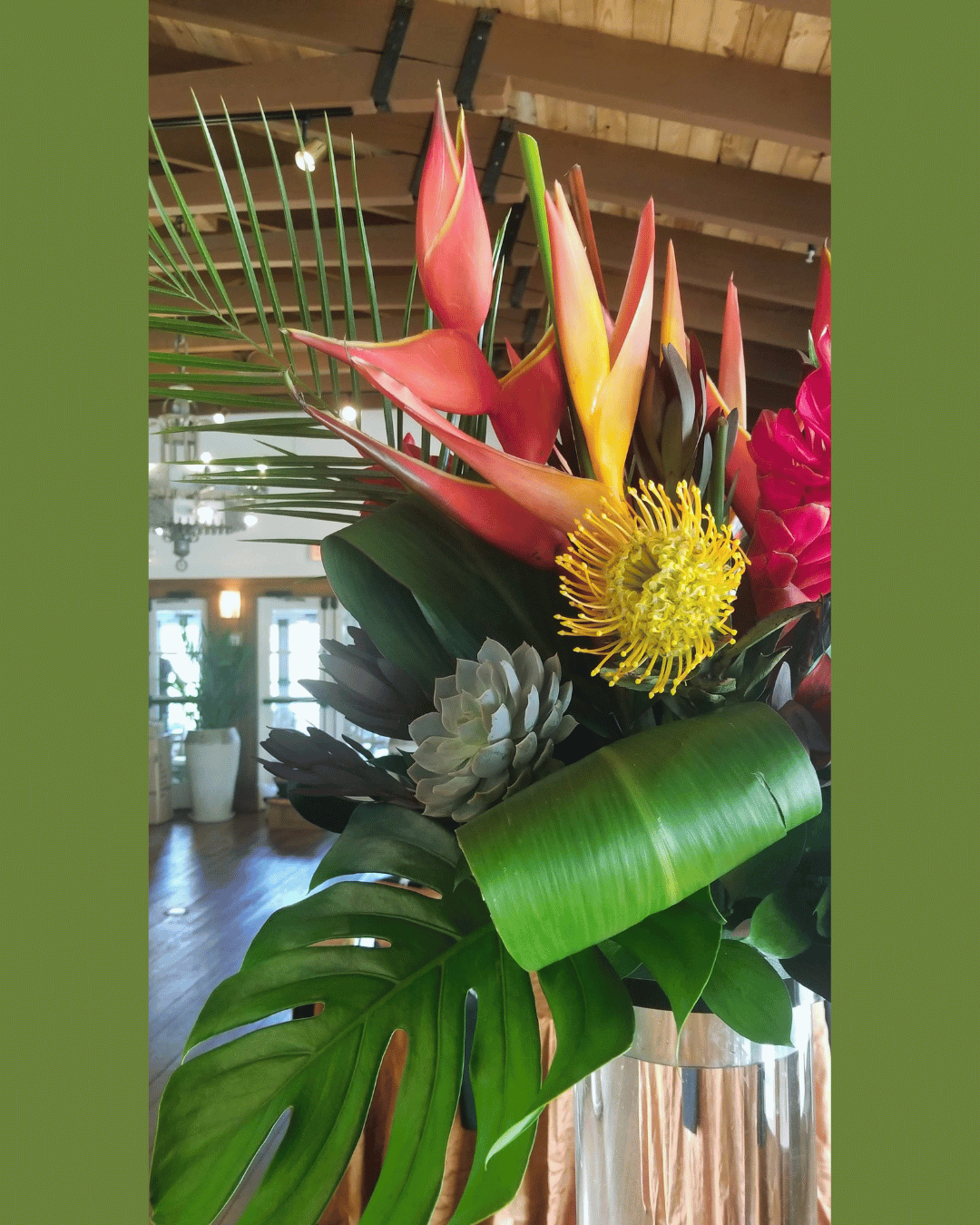
I never design flowers without considering the space around them.
A floral arrangement is part of an environment.
For a waterfront event, I may use lighter, airier palms and white orchids so the design seems to move with the landscape.
Inside a contemporary Miami residence, I might choose strong monstera leaves with restrained white blooms to complement clean architectural lines.
In a lush outdoor garden, I can allow the arrangement to become more abundant because it is in direct conversation with nature.
And in an elegant ballroom, tropical greenery can become dramatically sophisticated through scale, candlelight and carefully selected florals.
The setting should always participate in the design.
One of the secrets behind memorable tropical floral arrangements in Miami is understanding that Miami itself is already part of the décor.
We do not need to imitate the tropics.
We are surrounded by them.
Create Movement Instead of Perfect Symmetry
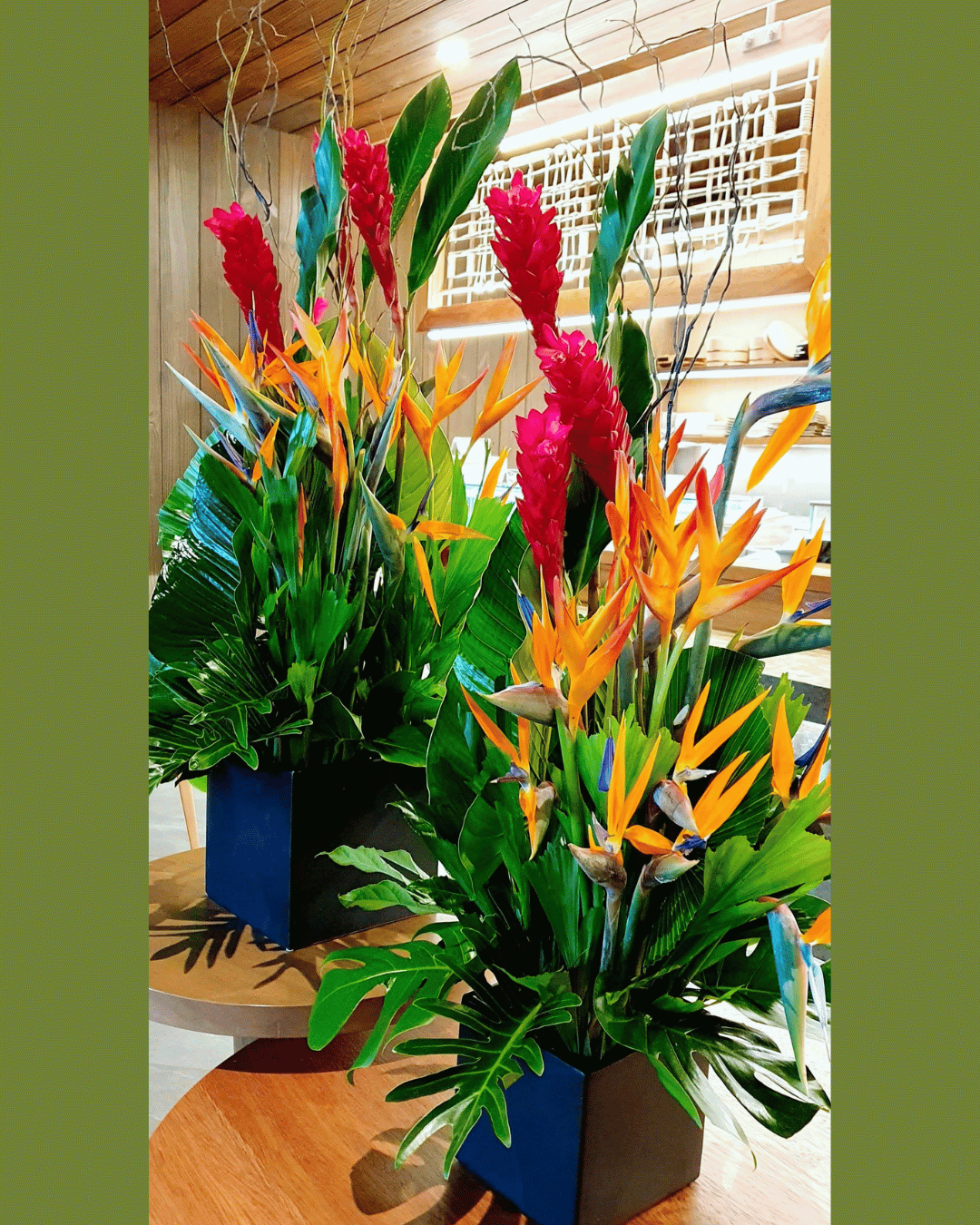
Nature is rarely perfectly symmetrical.
That is why some of my favorite arrangements seem to move.
A palm leaf rises slightly higher on one side.
An orchid cascades unexpectedly.
A monstera leaf extends just beyond the vessel.
Those gestures give the arrangement personality.
Perfectly rounded floral designs can be beautiful, but when I am working with tropical materials, I often prefer something more organic.
I want the eye to travel through the composition.
This is also why varying heights is so important.
When flowers are positioned at exactly the same level, even extraordinary blooms can appear flat. Different heights create depth and allow individual elements to emerge naturally.
A sophisticated tropical centerpiece should feel composed—but never rigid.
The Secret to a Lush Arrangement Is Knowing When to Stop
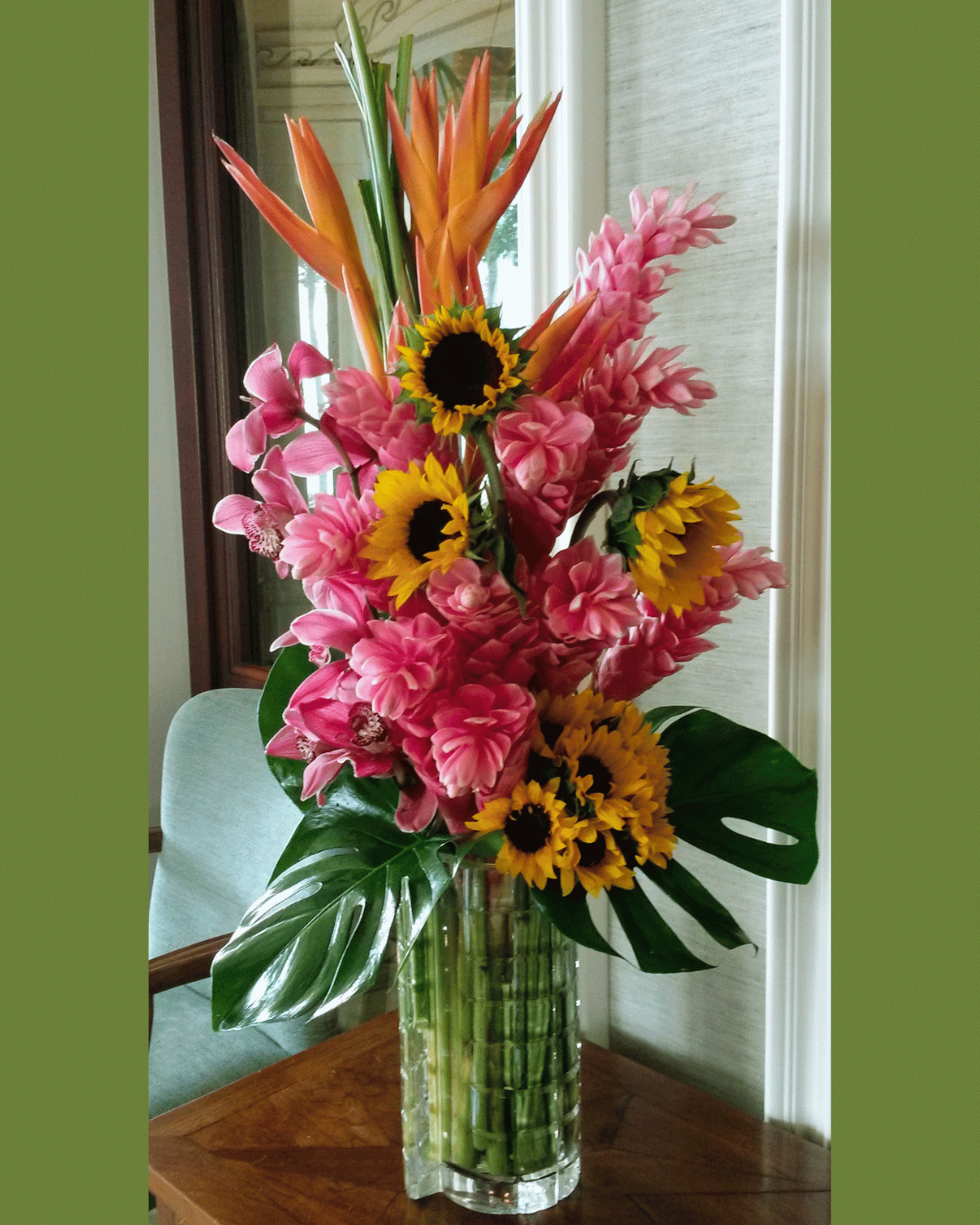
Clients sometimes assume that creating a lush arrangement means continuing to add more and more flowers.
For me, the opposite is often true.
One of the most important moments in the creative process is recognizing when an arrangement is finished.
Lushness comes from layering, scale, texture and movement—not simply from quantity.
I want to see the glossy surface of a leaf against the softness of a petal.
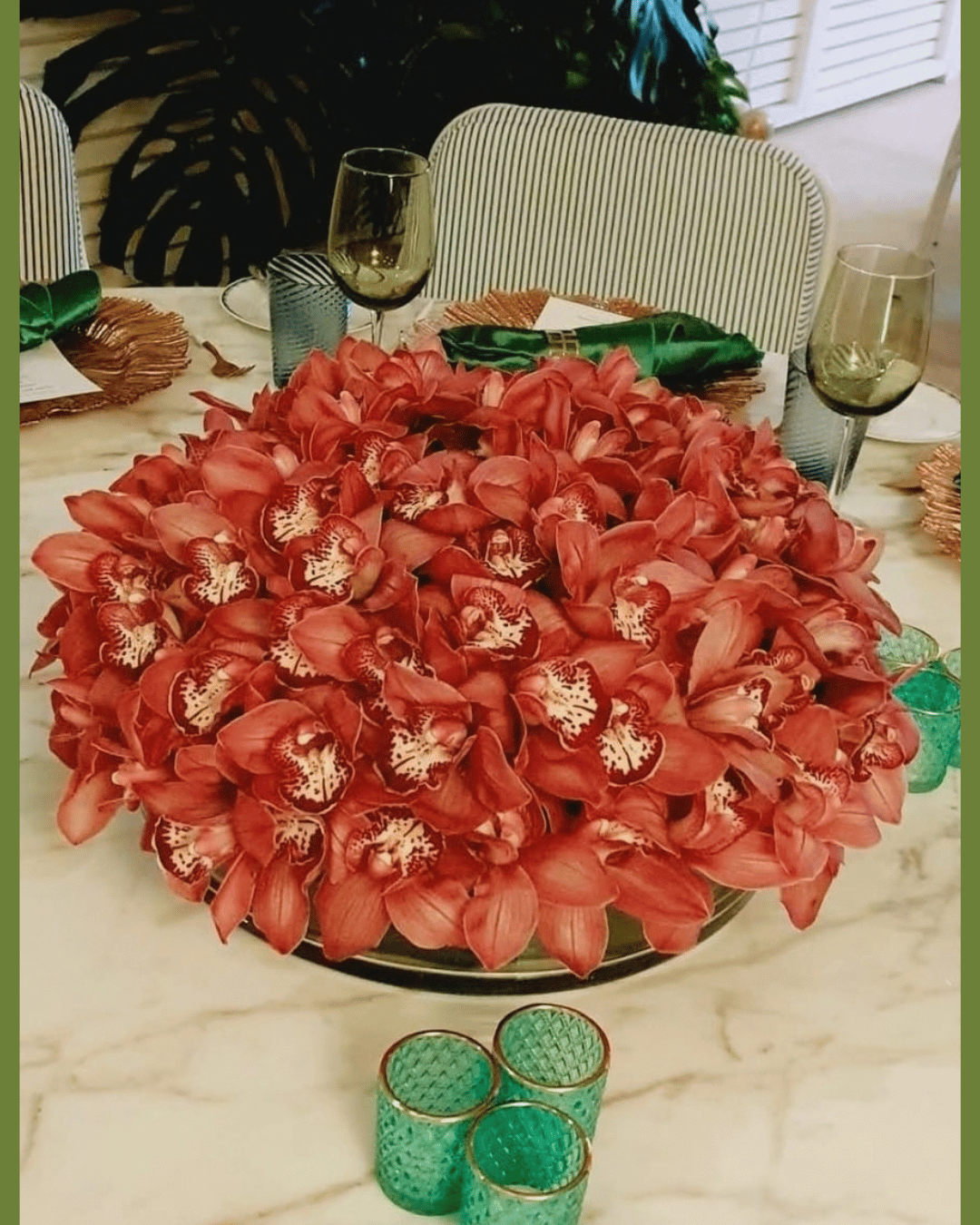
A single orchid to have enough breathing room for its shape to be appreciated.
I want greenery to create shadows and flowers to bring light.
When all those elements begin speaking to one another, I stop.
Because great floral design should never feel as though every possible idea has been used.
It should feel effortless.
That is the kind of tropical beauty I love most: abundant yet edited, dramatic yet elegant, and deeply connected to the energy of Miami.
When palms, orchids, monstera leaves and flowers are combined with intention, they do much more than decorate a table or transform a room.
They create a sense of place.
And sometimes, the most memorable arrangement is the one that makes you feel Miami before you can even explain why.
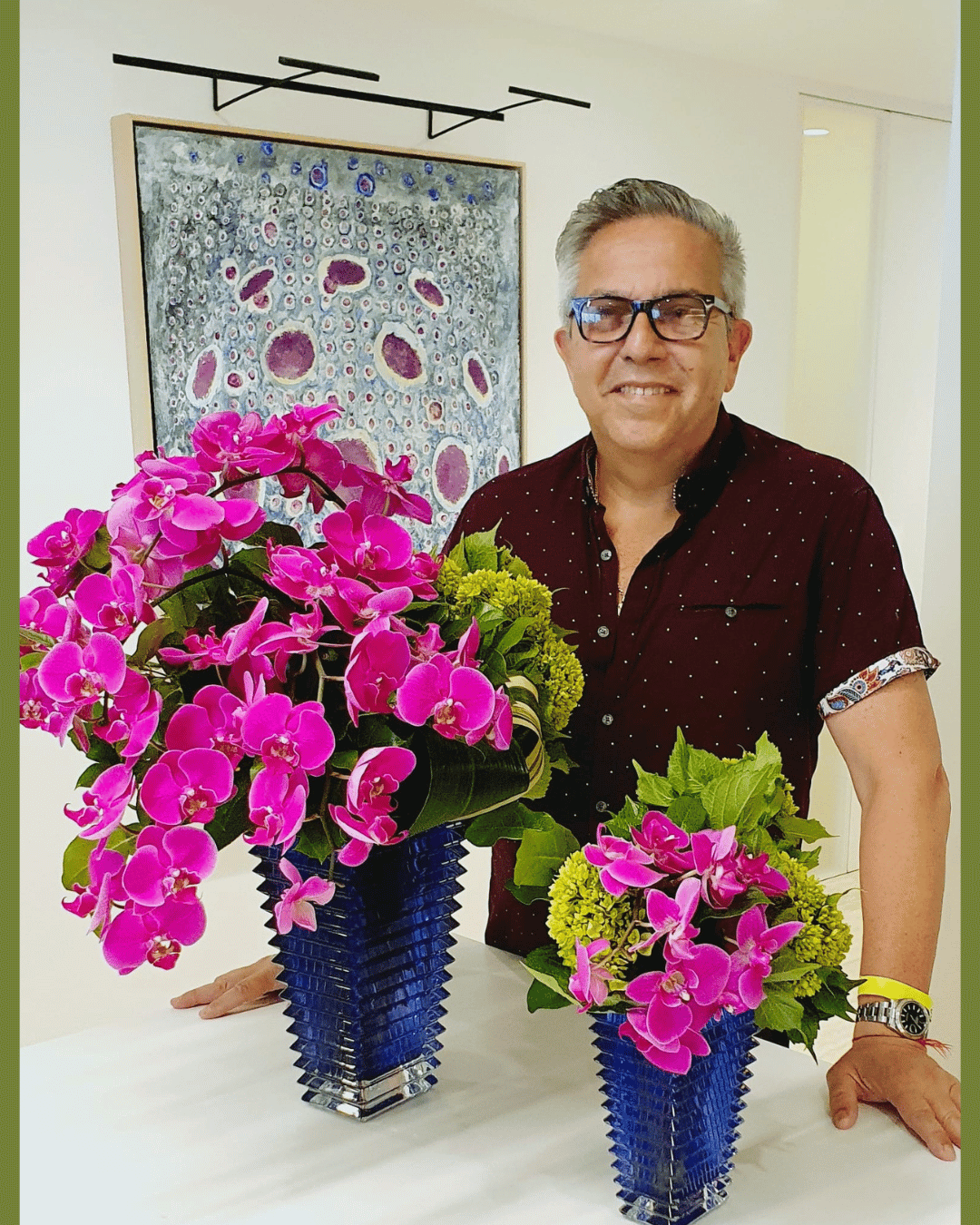
— Francis Rosales Yechitch.
Founder, Alegria Party Design
Designing with Blooms
Follow me on Instagram: @AlegriaPartyDesign
“Tropical beauty is not about excess—it is about intention. When greenery, flowers, movement and space work together, an arrangement becomes more than decoration; it becomes a sense of place.”
—Francis Yechitch
Spanish Version
Follaje Tropical y Flores: Guía de un Artista Floral para Crear Arreglos Exuberantes
Por Francis Rosales Yechitch| Designing with Blooms
Hay algo en el follaje tropical que pertenece naturalmente a Miami.
Quizás sea la arquitectura que se abre hacia jardines y vistas al agua. Tal vez sea nuestra luz, esa que hace que cada tonalidad de verde se perciba más intensa. O quizás sea simplemente que, en Miami, la naturaleza nunca ha aprendido a ser discreta.
Como diseñador floral y de eventos, siempre me ha fascinado esa sensación de abundancia.
En Alegria Party Design, con frecuencia trabajo con clientes que me dicen que quieren algo “tropical”, cuando en realidad lo que buscan es mucho más específico. Quieren un arreglo que se sienta exuberante sin verse excesivo, glamoroso sin caer en lo teatral y muy Miami sin parecer la decoración de una fiesta temática.
Esa diferencia es precisamente donde comienza el diseño.
Para mí, los mejores arreglos florales tropicales en Miami nacen cuando tratamos el follaje —palmas, monsteras, filodendros y otras hojas de formas escultóricas— con la misma importancia que tradicionalmente reservamos para las flores.
Después incorporo las flores estratégicamente.
Una orquídea puede aportar movimiento. Un grupo de rosas puede suavizar la composición. Los anturios añaden estructura. Y de pronto, lo que comenzó como una selección de hojas tropicales se convierte en toda una atmósfera.
Tropical no tiene que significar exceso
Uno de los mayores errores al pensar en diseño floral tropical es asumir que todo tiene que ser enorme, intensamente colorido y desbordante.
No necesariamente.
El verdadero lujo, muchas veces, está en saber depurar.
Puedo utilizar una sola hoja espectacular de monstera en lugar de cinco y permitir que su silueta se convierta en parte esencial de la composición. Unas pocas hojas de palma colocadas con intención pueden aportar altura y movimiento sin saturar la mesa.
El objetivo no es demostrar cuántos elementos tropicales podemos incluir en un arreglo.
El objetivo es lograr que cada uno de ellos tenga una razón para estar allí.
Cuando diseño, constantemente me pregunto: ¿Dónde necesita descansar la mirada? ¿Hacia dónde debe moverse la composición? ¿Qué elemento merece convertirse en protagonista?
Esas preguntas son tan importantes en el diseño floral como lo son en el diseño de interiores.
Comienza con el follaje y construye la arquitectura
Cuando las personas observan un arreglo floral, normalmente se fijan primero en las flores.
Como diseñador, muchas veces comienzo por otro lugar.
Comienzo por el verde.
Las palmas, las hojas de monstera y el follaje tropical de formas escultóricas crean lo que a mí me gusta llamar la arquitectura del arreglo.
Una palma puede dirigir la mirada hacia arriba.
La hoja de monstera puede establecer una elegante línea horizontal.
Y una hoja tropical curva puede aportar movimiento.
Una vez definida esa arquitectura, comienzo a incorporar las flores dentro de los espacios que el follaje ha ido creando.
Esta técnica aporta dimensión al arreglo, en lugar de hacerlo lucir simplemente lleno.
También es una de mis favoritas para eventos de gran escala, porque el follaje tiene la capacidad de transformar por completo un espacio incluso antes de que los invitados se detengan a observar una flor en particular.
Las orquídeas son el lujo silencioso de Miami
Si hay una flor a la que regreso una y otra vez cuando diseño composiciones tropicales, es la orquídea.
Las orquídeas tienen una cualidad extraordinaria: pueden sentirse exóticas y sofisticadas al mismo tiempo.
No necesitan llamar la atención a gritos.
Una orquídea phalaenopsis blanca cayendo suavemente entre hojas de verde profundo puede sentirse casi arquitectónica. Las orquídeas moradas aportan dramatismo, mientras que las variedades en tonos rosa empolvado añaden romanticismo a una paleta tropical sin restarle modernidad.
Me encanta especialmente trabajar con orquídeas en casas y eventos de Miami porque se integran de manera natural con nuestro entorno.
Funcionan maravillosamente en interiores contemporáneos, espacios frente al agua, arquitectura moderna y celebraciones al aire libre.
Mi regla es sencilla: cuando el follaje ya aporta dramatismo, deja que la orquídea aporte elegancia, no competencia.
La monstera es mucho más que un símbolo tropical
Las hojas de monstera se han convertido prácticamente en un símbolo del estilo tropical y, precisamente por eso, hay que utilizarlas con criterio.
Cuando un elemento se vuelve inmediatamente reconocible, el reto del diseñador consiste en hacerlo sentir nuevo otra vez.
A mí me gusta utilizar las monsteras casi como piezas escultóricas.
Sus aberturas naturales crean espacios negativos dentro de la composición, un recurso visual sumamente valioso.
En lugar de colocarlas por todas partes, puedo utilizar una gran hoja en la base de un arreglo o ubicarla en un ángulo inesperado para crear asimetría.
El resultado se siente más editorial y menos predecible.
En un diseño tropical sofisticado, una monstera nunca debería sentirse como un elemento agregado simplemente porque estamos en Miami.
Debe sentirse esencial dentro de la composición.
Combina follaje tropical con flores inesperadas
Aquí es donde los arreglos tropicales comienzan a ponerse realmente interesantes.
No existe ninguna regla que diga que el follaje tropical solo puede combinarse con flores tropicales.
De hecho, muchas veces prefiero hacer justamente lo contrario.
Imagina hojas brillantes de monstera junto a rosas de jardín color crema.
Palmas combinadas con hortensias blancas.
Orquídeas apareciendo entre delicados ranúnculos.
Anturios rodeados de flores más suaves y románticas.
Esos contrastes crean tensión visual, y un buen diseño floral necesita un poco de esa tensión.
El follaje aporta fuerza y estructura, mientras que las flores más delicadas introducen suavidad y romanticismo.
Para una boda, puedo suavizar el follaje tropical con flores blancas o en delicados tonos rosa empolvado. En una celebración contemporánea, quizás prefiera combinar el verde con flores escultóricas y una paleta más contenida.
Tal vez en una cena glamorosa en Miami, puedo incorporar tonalidades más profundas: vino, ciruela, coral quemado o incluso algunos acentos chocolate.
Lo tropical no tiene por qué definir la paleta de colores.
Nos da el vocabulario. El diseñador todavía tiene que escribir la historia.
Deja que Miami influya en el arreglo
Nunca diseño flores sin pensar en el espacio que las rodea.
Un arreglo floral forma parte de un ambiente.
Para un evento frente al agua, puedo utilizar palmas más ligeras y etéreas junto a orquídeas blancas para que el diseño se mueva visualmente con el paisaje.
En una residencia contemporánea de Miami, quizás prefiera hojas de monstera de líneas definidas combinadas con flores blancas muy controladas, de manera que complementen la arquitectura limpia del espacio.
En un jardín tropical al aire libre, puedo permitir que el arreglo sea más abundante porque está dialogando directamente con la naturaleza.
Y en un elegante salón de gala, el follaje tropical puede adquirir una sofisticación dramática a través de la escala, la luz de las velas y una cuidadosa selección de flores.
El entorno siempre debería participar en el diseño.
Uno de los secretos para crear arreglos florales tropicales en Miami realmente memorables es entender que Miami ya forma parte de la decoración.
No necesitamos imitar el trópico.
Vivimos rodeados de él.
Crea movimiento en lugar de buscar una simetría perfecta
La naturaleza rara vez es perfectamente simétrica.
Por eso algunos de mis arreglos favoritos parecen estar en movimiento.
Una hoja de palma puede elevarse ligeramente más de un lado.
La orquídea puede caer de manera inesperada.
Y una monstera puede extenderse apenas más allá del recipiente.
Son esos pequeños gestos los que le dan personalidad al diseño.
Los arreglos perfectamente redondos pueden ser bellísimos, pero cuando trabajo con materiales tropicales, muchas veces prefiero composiciones más orgánicas.
Quiero que la mirada viaje a través del arreglo.
Por eso también es tan importante jugar con diferentes alturas.
Cuando todas las flores están colocadas exactamente al mismo nivel, incluso las más extraordinarias pueden verse planas. Las distintas alturas generan profundidad y permiten que cada elemento aparezca de manera más natural.
Un centro de mesa tropical sofisticado debería sentirse cuidadosamente compuesto, pero nunca rígido.
El secreto de un arreglo exuberante es saber cuándo detenerse
Algunos clientes piensan que crear un arreglo exuberante significa continuar agregando más y más flores.
Para mí, muchas veces ocurre exactamente lo contrario.
Uno de los momentos más importantes del proceso creativo es reconocer cuándo el arreglo ya está terminado.
La exuberancia nace de las capas, la escala, las texturas y el movimiento, no simplemente de la cantidad.
Quiero poder apreciar el brillo de una hoja junto a la suavidad de un pétalo.
Que una sola orquídea tenga suficiente espacio a su alrededor para que podamos apreciar verdaderamente su forma.
Que el follaje cree sombras y que las flores aporten luz.
Cuando todos esos elementos comienzan a conversar entre sí, me detengo.
Porque un gran diseño floral nunca debería sentirse como si hubiéramos utilizado todas las ideas posibles.
Debería sentirse natural, casi sin esfuerzo.
Ese es el tipo de belleza tropical que más me inspira: abundante pero depurada, dramática pero elegante y profundamente conectada con la energía de Miami.
Cuando las palmas, las orquídeas, las hojas de monstera y las flores se combinan con intención, hacen mucho más que decorar una mesa o transformar un espacio.
Crean una sensación de lugar.
Y algunas veces, el arreglo más memorable es aquel que te hace sentir Miami incluso antes de que puedas explicar exactamente por qué.
— Francis Rosales Yechitch.
Fundador, Alegria Party Design
Designing with Blooms
“La belleza tropical no se trata de exceso, sino de intención. Cuando el follaje, las flores, el movimiento y el espacio trabajan en armonía, un arreglo se convierte en mucho más que decoración: crea un sentido de lugar.”
—Francis Yechitch
#SponsoredPost
Craving for more? We recommend:
Carolina Herrera Brings a Venezuelan Fashion Legacy to Miami’s Design District
Cartier Le Chœur des Pierres Celebrates the Art of Gemstones
Louis Vuitton Multipass Bag Debuts as the House’s New Signature Icon for Fall-Winter 2026
FENDI Unveils Maria Grazia Chiuri’s Debut Couture Fall/Winter 2026-2027 Collection in Rome
COVERGIRL Brings Glowing Beauty Trends to Miami Swim Week 2026
Summer Wedding Guest Style Guide: Elegant Occasion Dressing with GR LONDON PARIS
Louis Vuitton Women’s Resort Collection: The Ultimate Luxury Wardrobe for Chic Summer Getaways
Kimi Antonelli Wins the 2026 Miami Grand Prix as Louis Vuitton Celebrates Victory in Style
Lacoste Miami Open 2026 Finals Weekend: Where Sport and Fashion Met in Style